
Article Summary
- Atlanta Fire Rescue Department inspections cover your entire commercial kitchen — not just the cooking equipment, but your exhaust system, fire suppression, electrical, storage, and emergency systems.
- Grease buildup in your hood, ducts, and exhaust fan is one of the fastest ways to earn a violation, and it’s one of the most preventable.
- NFPA 96 compliance — including proper cleaning frequency and service documentation — is something inspectors check every single visit, and missing paperwork can result in a violation even when the physical equipment looks clean.
- This checklist walks through every major category Atlanta fire inspectors evaluate so you can identify gaps before the inspector does.
- Preparation is the difference between a smooth inspection and a forced correction period — the restaurants that consistently pass are the ones that treat inspection readiness as part of their normal operations, not a last-minute scramble.
- Professional hood cleaning in Atlanta is one of the most concrete, documentable steps you can take to walk into your next inspection with confidence.
Why Preparation Matters More Than You Think
There’s a version of Atlanta restaurant ownership where fire inspections are stressful, unpredictable events that feel like they come out of nowhere. And then there’s the version where they’re almost routine — where the inspector walks through, checks the documentation, looks at the equipment, and wraps up in a reasonable amount of time without issuing a single notice.
The difference between those two experiences isn’t luck. It’s preparation.
The Atlanta Fire Rescue Department conducts fire safety inspections of commercial cooking establishments on a regular basis. The frequency varies based on occupancy type and prior inspection history, but no Atlanta restaurant operator should assume they have unlimited time between visits. Inspections can also be triggered by complaints, permit activity, or a change of ownership. And unlike health department inspections, which many operators prepare for as a matter of course, fire inspections sometimes catch kitchen teams off guard.
This checklist is designed to change that. It covers every major category that Atlanta fire inspectors evaluate in commercial kitchens, with particular depth on exhaust system requirements — the area where most violations originate and where preparation has the clearest, most direct impact.
Work through it honestly. Note anything that falls short. Then fix it before the inspector does it for you.
Before You Start: Understand What Inspectors Are Working From
Atlanta fire inspectors don’t write their own rules. They apply Georgia’s state minimum standard codes — specifically the Georgia State Minimum Fire Code, which adopts NFPA 1 (the Fire Code) and NFPA 96 (the Standard for Ventilation Control and Fire Protection of Commercial Cooking Operations) as its primary references for commercial kitchens.
When an inspector walks into your kitchen, they’re measuring what they see against those standards. That means the checklist in this article isn’t arbitrary — every item on it traces back to a specific code provision. If something on this list is out of compliance in your kitchen, it’s out of compliance with Georgia law, not just with a suggestion.
That framing matters because it helps clarify what “passing” an inspection actually means. It doesn’t mean impressing the inspector. It means your kitchen meets the legal requirements that exist to protect your staff, your customers, and the building your business operates in. Everything on this checklist serves that purpose.
Section 1: The Hood and Exhaust System Checklist
The exhaust system is where the majority of Atlanta commercial kitchen fire inspection violations originate. It’s also the area where a thoughtful maintenance routine makes the biggest difference. Go through this section carefully — it’s the one that requires the most lead time to correct if you find problems.
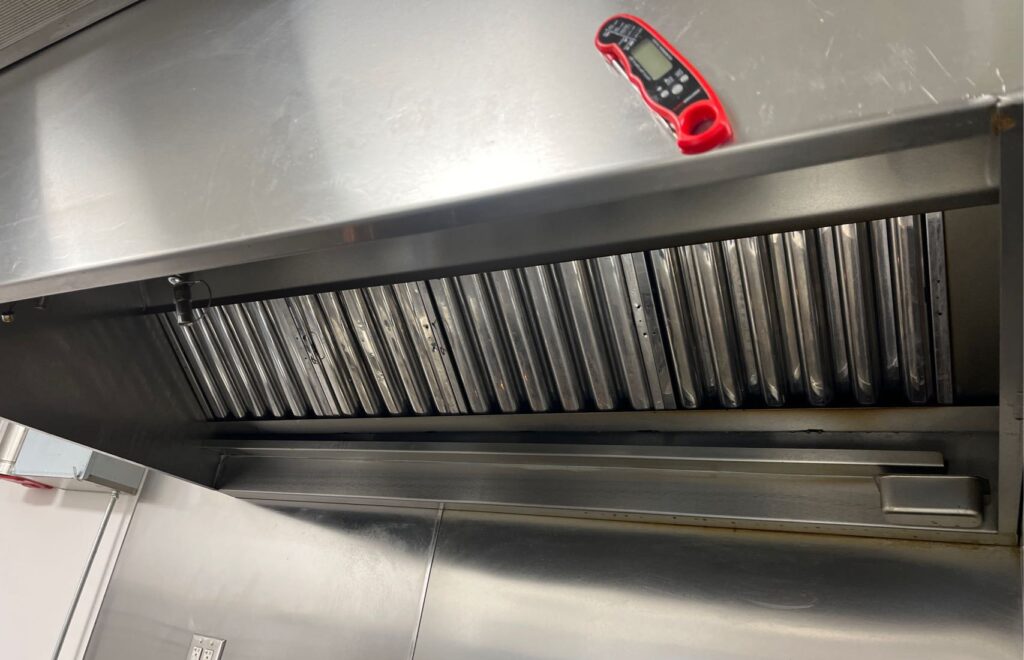
Hood Canopy and Plenum
- The interior of the hood canopy is clean. There should be no visible grease film, residue, or buildup on the interior surfaces of the hood canopy. Light discoloration from heat is normal; a greasy, tacky, or coated surface is not.
- The plenum chamber behind the baffle filters is clean. This is the space between the filter rack and the duct collar. It’s where grease collects heavily and where inspectors look closely. Bare metal is the standard — not “clean enough.”
- Grease drip troughs and collection cups are present, in place, and emptied. The grease collection components below the baffle filters should be functional, in good condition, and not overflowing. Overflowing grease cups are an immediate fire hazard and an inspection violation.
- The hood extends adequately over all cooking equipment. The canopy should overhang all cooking surfaces by the required distances. Equipment that has been rearranged or added after the original hood installation sometimes ends up outside the hood’s coverage area.
- No visible damage to the hood structure. Dents, holes, missing panels, or gaps in the hood assembly that could allow grease or smoke to escape into the kitchen space are flagged during inspections.
Baffle Filters
- All baffle filter positions are filled — no missing filters. A gap in the filter array allows unfiltered grease vapor to enter the duct system directly. Even one missing filter is a violation.
- Filters are correctly installed. Baffle filters have a correct orientation and must be seated properly in the filter rack. Filters installed upside down or backward don’t capture grease effectively.
- Filters are clean and not saturated with grease. Filters clogged with hardened grease restrict airflow and are a fire hazard. Filter cleaning should happen on a regular schedule between full professional cleanings — daily or weekly in high-volume kitchens.
- Filters are in good condition — no cracks, bends, or damage that would create gaps in grease capture coverage.
- The filter rack and support system are intact and functional.
Grease Ducts
- Duct access panels are present at required intervals. NFPA 96 requires access panels at specific spacing along the duct run so the interior can be inspected and cleaned. If your duct system was installed without adequate access panels, or if building modifications have blocked access to existing panels, this is a violation that requires structural correction.
- Access panels are properly labeled. Panels should be marked to indicate they are grease duct access points.
- Access panels are accessible — not buried behind stored equipment, blocked by ceiling modifications, or otherwise unreachable.
- The duct interior is clean when viewed through access panels. Inspectors will look through accessible panels. Significant grease accumulation on interior duct walls is a violation.
- Duct joints and seams show no visible grease leakage. Grease weeping from duct joints indicates a sealing problem that can be both a fire and a contamination hazard.
- The duct system is free of unauthorized openings. Holes drilled through duct walls for electrical runs or other purposes are a serious violation.
Exhaust Fan
- The rooftop exhaust fan is clean. Fan blades, the motor housing, the fan base, and the curb mount should all be free of grease accumulation. A heavily greased fan is both a fire and a mechanical failure risk.
- The fan is operational and running at appropriate capacity. A fan that has been slowed by grease accumulation on the blades or by a struggling motor isn’t moving adequate air through the system, which reduces hood capture efficiency and accelerates grease buildup in the ducts.
- Grease containment at the fan discharge point is functional. Current NFPA 96 requirements address grease collection at the point where the exhaust exits the fan. Grease draining freely onto the rooftop surface is a code violation.
- The rooftop area around the fan is free of excessive grease accumulation. Grease-saturated roofing material around the exhaust fan discharge is a fire hazard and increasingly a focus area during Atlanta inspections.
Service Documentation
- A current service sticker is affixed to the hood. The sticker should show the date of the most recent professional cleaning and the name of the cleaning company. Its absence is one of the first things inspectors flag.
- The cleaning date on the sticker is within the required frequency for your kitchen type. A sticker showing a cleaning from eight months ago on a high-volume charbroiler kitchen is a violation regardless of how the hood looks.
- A written service report from the most recent cleaning is on file. The report should describe what was cleaned, confirm that the work met NFPA 96 standards, and ideally include before-and-after photographs.
- Service records going back at least 12 months are available on request. Inspectors sometimes ask for historical records, not just the most recent service.
- The cleaning frequency documented in your records matches your kitchen’s actual cooking type and volume. If your records show quarterly cleanings but your cooking operation actually requires monthly service, the frequency itself is a compliance issue.
Section 2: Fire Suppression System Checklist
The automatic fire suppression system installed in your hood is a separate but closely related component that inspectors evaluate alongside the exhaust system. A properly maintained suppression system is one of the most important pieces of fire safety infrastructure in any commercial kitchen.
- The suppression system has been inspected and serviced within the required interval. NFPA 17A and your suppression system manufacturer’s requirements specify inspection and service intervals — typically every six months for most wet chemical systems. The service tag on the system should reflect a current inspection date.
- All suppression nozzles are in place, unobstructed, and properly oriented. Missing, capped, or blocked nozzles are immediate violations and mean your system can’t protect the cooking surfaces it’s designed to cover.
- The nozzle coverage matches your current equipment layout. If cooking equipment has been moved, replaced, or added since the suppression system was last evaluated, the nozzle placement may no longer provide proper coverage. A system designed to protect a fryer bank doesn’t automatically protect a charbroiler added after the original installation.
- The suppression system pull station is accessible and unobstructed. Staff need to be able to reach and operate the manual pull station quickly in an emergency.
- The suppression system is connected to the gas shut-off. NFPA 96 requires that suppression system activation automatically shut off the gas supply to the cooking equipment. This interlock should be tested as part of the regular suppression system service.
- The ansul or wet chemical agent cylinders are within service life and at proper pressure. Cylinders that are out of date, low pressure, or past their hydrostatic test date need to be replaced or recertified.
- There is no visible damage to suppression system piping, nozzles, or detection components.
Section 3: Cooking Equipment and Gas Systems Checklist
- All cooking equipment is in good working condition with no visible gas leaks, damaged burners, or malfunctioning controls.
- Gas connections are in good condition — flexible connectors show no signs of wear, cracking, or kinking, and all connections are secure.
- The main gas shut-off valve location is known to staff and is accessible without obstruction. Inspectors sometimes ask kitchen staff where the shut-off is during inspections.
- Gas appliances have adequate clearance from combustible materials. Equipment pushed against walls or stored items with inadequate clearance can create fire hazards.
- Cooking equipment is positioned under the hood canopy’s effective capture area. Equipment that has migrated outside the hood’s coverage zone over time isn’t properly ventilated.
- Fryer batteries are equipped with proper spacing between fryers and adjacent open-flame equipment. NFPA 96 requires a physical divider or adequate spacing between fryers and adjacent open-flame appliances to prevent ignition of hot oil.
- All equipment surfaces are reasonably clean — particularly the areas around and below cooking equipment where grease accumulates on the floor, equipment legs, and adjacent surfaces.
Section 4: Fire Extinguisher Checklist
- Class K fire extinguishers are present in the kitchen. Class K extinguishers are specifically designed for commercial kitchen cooking fires involving oils and fats. Standard ABC extinguishers are not a substitute for Class K coverage in a commercial kitchen.
- The Class K extinguisher is within 30 feet of the cooking equipment it’s intended to protect, measured along the path of travel.
- Extinguishers have been inspected within the past 12 months. The inspection tag on the extinguisher should show a current annual inspection date from a qualified fire equipment company.
- Extinguisher pressure gauges read in the acceptable range (green zone on the gauge).
- Extinguishers are mounted in visible, accessible locations — not hidden behind equipment, stored in closets, or otherwise difficult to reach in an emergency.
- Additional ABC extinguishers are present as required for other areas of the facility outside the immediate cooking zone.
- Staff know the location of all extinguishers. An inspector may ask.
Section 5: Emergency Systems and Egress Checklist
- All emergency exit doors open freely from the inside without the use of a key, special knowledge, or more than a single motion. Propped-open fire doors with wedges removed are a common violation.
- Exit signs are illuminated and visible from all points in the kitchen and dining areas. Exit signs with burned-out bulbs are flagged.
- Emergency lighting is functional. Battery backup emergency lights should activate when normal power is cut. Many operators test these only when reminded, and dead batteries are common.
- Exit pathways are clear of obstruction. Storage that has crept into exit corridors, cooler doors that swing into egress paths, or equipment that narrows a required exit width are all violations.
- Emergency contact information is posted per local requirements.
- The fire alarm system has been tested and serviced within the required inspection interval. The service tag or certificate should be available for the inspector.
- Smoke detectors and heat detectors in the kitchen are functional and have been tested within required intervals.
Section 6: Electrical Systems Checklist
- All electrical panels are accessible — not blocked by stored equipment, shelving, or refrigeration units. A clear 36-inch working space in front of electrical panels is required by code.
- No open knockouts or missing breaker positions in electrical panels.
- Extension cords are not used as permanent wiring. Extension cords in commercial kitchens are a common violation — they’re intended for temporary use only.
- All electrical outlets in wet or splash areas are GFCI-protected. Ground fault protection is required near sinks, dishwashing areas, and other water-adjacent locations.
- No overloaded circuits or double-tapped breakers visible in the panel.
- Light fixtures in the kitchen are functioning with no burned-out bulbs in work areas. Beyond the safety issue, poor lighting in a commercial kitchen creates food safety risks as well.
- Electrical conduit and wiring are in good condition — no exposed conductors, damaged conduit, or abandoned wiring hanging from the ceiling.
Section 7: Storage and Housekeeping Checklist
- Flammable and combustible materials are stored away from heat sources. Cooking oils, cleaning chemicals, and paper goods should not be stored near ranges, fryers, or other heat-generating equipment.
- Chemical storage is organized and properly labeled. Inspectors look for chemicals that are stored in unlabeled containers or in ways that create mixing hazards.
- Grease and cooking waste receptacles are covered and positioned away from heat sources.
- The area under and around cooking equipment is clean. Grease accumulation under fryers and behind ranges on the floor is a fire hazard.
- Cardboard boxes and paper goods are not stored near cooking equipment or in mechanical spaces.
- Mechanical rooms and utility spaces are clean and organized — not used as informal storage for kitchen supplies, spare equipment, or janitorial materials.
- The kitchen and storage areas are free of pest evidence. Fire inspectors are not health inspectors, but obvious pest conditions can trigger additional scrutiny or cross-agency reporting.
Section 8: Staff Knowledge and Operational Readiness
This section doesn’t have physical items to check — it covers the human element of a fire inspection, which matters more than many operators realize.
- Kitchen staff know the location of the gas shut-off valve. Inspectors occasionally ask staff this question directly.
- Kitchen staff know the location of all fire extinguishers and have basic knowledge of how to use them.
- Staff know the evacuation procedure for the building.
- Someone on the management team knows where the fire inspection documentation is stored — suppression system service records, hood cleaning reports, fire alarm service certificates.
- The person responsible for scheduling hood cleaning knows your required cleaning frequency under NFPA 96 for your specific cooking operation.
- New equipment additions or kitchen layout changes have been evaluated for suppression system coverage and code compliance before going into service.
The Most Common Violations Atlanta Restaurants Face — And How to Get Ahead of Them
Working through the checklist above will surface most issues before an inspector does. But it’s worth calling out the violations that come up most consistently in Atlanta commercial kitchen inspections, because they’re the ones worth double-checking even if you feel generally confident about your compliance status.
Overdue Hood Cleaning
This is the single most frequent violation in Atlanta commercial kitchen fire inspections. A high-volume kitchen that’s running quarterly cleanings when it needs monthly service, or a restaurant that extended its cleaning interval during a slow season and never adjusted back, ends up with a grease accumulation problem that’s visible the moment an inspector looks at the plenum.
The fix is straightforward: know your required frequency under NFPA 96 for your actual cooking type, put the service on a calendar, and don’t let it slip. If your cooking volume has changed — you added a charbroiler, extended your operating hours, or started doing significantly more covers — reassess whether your current cleaning frequency still matches your kitchen’s actual grease production.
Missing or Outdated Service Documentation
A hood that looks clean but has no service sticker, or a sticker from 14 months ago on a kitchen that’s supposed to be cleaned quarterly, is a violation regardless of the physical condition of the equipment. Keep a folder — physical or digital — with your most recent hood cleaning report, your suppression system service certificate, and your fire alarm test documentation. Know where it is. Make sure your manager on duty knows where it is.
Suppression System Nozzle Misalignment
Equipment gets moved. Refrigerators get pushed a few inches to accommodate a new prep table. The fryer bank gets rearranged during a hood cleaning. Over time, cooking equipment can shift out of the suppression system’s designed coverage zone without anyone noticing — until the system is inspected. Have your suppression system provider evaluate nozzle coverage any time you make significant equipment changes, not just during the scheduled semi-annual service.
Blocked Electrical Panels
An electrical panel blocked by a rolling rack, a mop sink, or an ice machine is one of the most avoidable violations on the list. The required 36-inch clear working space in front of panels is a code requirement, but it’s also a practical necessity — in an electrical emergency, you need to be able to reach that panel immediately. Walk your kitchen and confirm that every panel is accessible right now.
Extension Cords as Permanent Wiring
Atlanta kitchens of all sizes and ages use extension cords in ways that violate code. An extension cord running a prep table mixer, powering a point-of-sale terminal, or keeping a reach-in cooler running in a tight corner feels like a practical solution — but it’s a violation that inspectors flag consistently. Permanent equipment needs permanent wiring.
Obstructed Exits
Box deliveries stacked in a corridor. A shelving unit that gradually migrated in front of an emergency exit door. A mop bucket parked in the egress path during service. These feel minor in the moment and accumulate over time without anyone making a deliberate decision to block an exit. Walk your egress paths regularly and treat any obstruction as something to fix immediately.
Building Your Pre-Inspection Routine
The restaurants in Atlanta that pass inspections most consistently aren’t the ones that scramble to address problems the week an inspector is expected. They’re the ones that have embedded basic compliance checks into their regular operations so that the kitchen is essentially always in inspection-ready condition.
Here’s a practical framework for building that kind of routine:
Daily: Wipe down hood surfaces and exterior. Empty and clean grease collection cups under filters. Clean or change baffle filters according to your volume (high-volume kitchens should clean filters daily). Confirm exit paths are clear at the end of each shift.
Weekly: Walk the kitchen with the inspection checklist in mind. Check that extinguisher gauges are in the acceptable range. Confirm that access panels aren’t blocked. Test emergency lighting.
Monthly (or per your cleaning schedule): Schedule professional hood cleaning based on your NFPA 96-required frequency. File the service report when you receive it. Confirm the service sticker is properly placed on the hood.
Semi-annually: Schedule suppression system inspection and service. Confirm nozzle coverage matches current equipment layout.
Annually: Schedule fire alarm system testing and service. Review all inspection documentation and confirm it’s complete and organized. Revisit your hood cleaning frequency to confirm it still matches your cooking volume.
This isn’t an overwhelming amount of work — most of it is five minutes here and ten minutes there. The challenge is consistency, and the way you build consistency is by assigning clear responsibility. Someone in your organization needs to own the inspection readiness checklist, and that person needs to have the authority to actually schedule and follow through on required services.
What to Do If You Find Problems Before an Inspection
Working through this checklist honestly may surface issues that need to be corrected. That’s exactly the point — finding a problem before the inspector does gives you the ability to fix it on your timeline rather than operating under a correction notice with a deadline.
For exhaust system issues — overdue cleaning, grease accumulation, missing filters, rooftop concerns — contact a professional hood cleaning company immediately and schedule service. Most reputable providers can accommodate urgent scheduling, and the cost of an expedited cleaning is far less than the cost of a violation notice or a forced closure.
For suppression system issues — outdated service, nozzle coverage questions, pressure concerns — contact your fire suppression service provider. These companies are accustomed to time-sensitive requests before inspections.
For structural issues — inaccessible duct sections, duct clearance violations, missing access panels — you’ll need a qualified contractor to assess the scope and timeline. These take longer to correct than operational issues, so address them as early as possible.
For documentation gaps — missing service records, incomplete file — contact your service providers for copies of historical reports. Most keep records and can provide documentation quickly.
The important thing is not to know about a problem and do nothing. An inspector who finds a violation that you clearly knew about — because a previous inspection report cited the same issue, or because your own records show the cleaning schedule has been ignored — is going to respond differently than one who finds a problem that appears to be genuinely unknown to the operator.
Frequently Asked Questions About Atlanta Fire Inspections
How much notice do Atlanta restaurants get before a fire inspection?
Scheduled inspections by the Atlanta Fire Rescue Department may or may not come with advance notice, depending on the type of inspection. Annual or periodic inspections are sometimes communicated in advance, but complaint-driven inspections or re-inspections following a prior violation may arrive with little or no advance warning. The right approach is to operate as though an inspection could happen on any given day — because it can.
What happens after a failed inspection in Atlanta?
When an Atlanta fire inspector identifies a violation, they typically issue a notice of violation that specifies the code section violated, a description of the deficiency, and a correction deadline. The timeline for correction varies by the severity of the violation. Life-safety issues — things like blocked exits, non-functional suppression systems, or significant immediate fire hazards — can result in a directive to cease cooking operations until the hazard is corrected. Less acute violations typically carry a correction period of 30 days or more, followed by a re-inspection.
Does every commercial kitchen in Atlanta get inspected?
The Atlanta Fire Rescue Department inspects all commercial cooking establishments within its jurisdiction on a scheduled basis. Inspection frequency can vary based on occupancy type, the establishment’s prior inspection history, and the department’s staffing and scheduling. New restaurants and establishments that have recently changed ownership or undergone renovation often receive inspections as part of the permitting process. Don’t assume that not having received a recent inspection means one isn’t coming.
Can I be present during an Atlanta fire inspection?
Yes, and you should be. Having the owner, manager, or a knowledgeable team member present during an inspection allows you to answer questions accurately, provide documentation on request, and understand any violations that are cited. An inspector who can’t get access to documentation that exists, or who has to write a violation because no one present could answer a simple question, creates an avoidable problem.
What’s the difference between a fire inspection and a health inspection in Atlanta?
Atlanta restaurant operators deal with inspections from both the Atlanta Fire Rescue Department (fire safety) and the Fulton County Board of Health or the Georgia Department of Public Health (food safety). These are separate agencies conducting separate inspections against separate code frameworks. They can and do share information, and a health inspector who observes a fire code issue may flag it to fire authorities, and vice versa. Passing one type of inspection doesn’t satisfy the other.
Does my insurance company do its own kitchen inspection?
Some commercial property insurers conduct their own loss-control inspections of insured properties, particularly for higher-value restaurant operations. These inspections typically cover similar ground to a fire inspection, with particular attention to fire protection systems and cooking equipment maintenance. An insurer’s loss-control representative who identifies an exhaust system that isn’t being maintained to code may adjust coverage terms or premium rates accordingly. This is separate from fire marshal enforcement but serves as another reason to maintain consistent compliance.
If I recently had my hood cleaned, do I need to worry about the exhaust fan and ductwork separately?
A compliant professional hood cleaning covers the entire exhaust system — from the filters and hood canopy through the duct interior and the rooftop exhaust fan. If the company you’re using only cleans the visible hood surfaces and filters, they’re not performing a compliant cleaning under NFPA 96. Before your next inspection, confirm with your cleaning provider exactly what’s included in their service. If the exhaust fan and duct interior aren’t on the list, the cleaning isn’t complete.
One Last Check Before You Close This Tab
If you’ve worked through this checklist and you’re confident your kitchen is in good shape, great — print it out, file it, and review it again in 90 days.
If you’ve found items that need attention, now is the time to address them. The items that Atlanta kitchens fail on most consistently — overdue hood cleaning, missing documentation, suppression system gaps, blocked egress — are all correctable with a few phone calls and follow-through.
The one item that tends to have the longest lead time and the most direct inspection impact is the exhaust system. If your hood is overdue for professional cleaning, or if you’re not sure when it was last serviced, that’s the call to make first.
Ready to Cross the Hood Cleaning Item Off Your Checklist?
Premier Grease has been helping Atlanta commercial kitchens pass fire inspections since 2001. We clean exhaust systems from filters to rooftop fan, to the bare-metal standard NFPA 96 requires, and every service includes time-stamped before-and-after photographs, a detailed service report, and a properly completed hood sticker — the complete documentation package your inspector expects to see.
No contracts. No surprises. Licensed, bonded, and insured with $5 million in general liability coverage. We work around your schedule, including nights and weekends, so cleaning happens when your kitchen is down — not when it’s in the middle of a dinner rush.