
Article Summary
- Atlanta fire inspectors examine your hood, grease ducts, exhaust fan, and baffle filters — any visible grease accumulation is a red flag.
- Grease buildup inside exhaust systems is one of the leading causes of commercial kitchen fires — a dirty duct system can carry a flame from the stove to the rooftop in seconds.
- NFPA 96 (the Standard for Ventilation Control and Fire Protection of Commercial Cooking Operations) sets the legal baseline for hood cleaning frequency and procedures in Atlanta.
- How often you need hood cleaning depends on your cooking style and volume — high-volume operations with charbroilers or woks may need monthly service.
- Inspectors expect to see a dated service sticker on the hood and written documentation (a cleaning report or manifest) from a certified hood cleaning company.
- Professional hood cleaning is one of the fastest, most reliable ways to avoid inspection failures, protect your staff, and keep your doors open.
Atlanta Restaurants and the Fire Code: More Connected Than You Think
Atlanta’s food scene is one of the most dynamic in the Southeast. From the Beltline’s food halls and Buckhead’s fine dining rooms to the late-night spots in Little Five Points and the busy cafeterias serving Georgia’s universities and hospitals, commercial kitchens across this city are running hard, often around the clock. That kind of cooking volume generates a staggering amount of grease, and grease that isn’t managed properly becomes a serious fire hazard.
The Atlanta Fire Rescue Department takes commercial kitchen fire safety seriously. Inspections are scheduled — and sometimes unscheduled — and the consequences of a failed inspection can range from a notice of violation to a forced closure. Understanding exactly what inspectors look for, and what the NFPA 96 fire code actually requires, is one of the most practical things a restaurant operator in Atlanta can do.
What the Atlanta Fire Marshal Actually Checks During a Kitchen Inspection
When an Atlanta fire inspector walks into your commercial kitchen, they’re not just glancing at the hood and moving on. The inspection is methodical, and it covers every part of the exhaust system from the filters directly above the cooking equipment all the way to the exhaust fan on your rooftop. Here’s what goes on that checklist:
1. Hood and Plenum Area
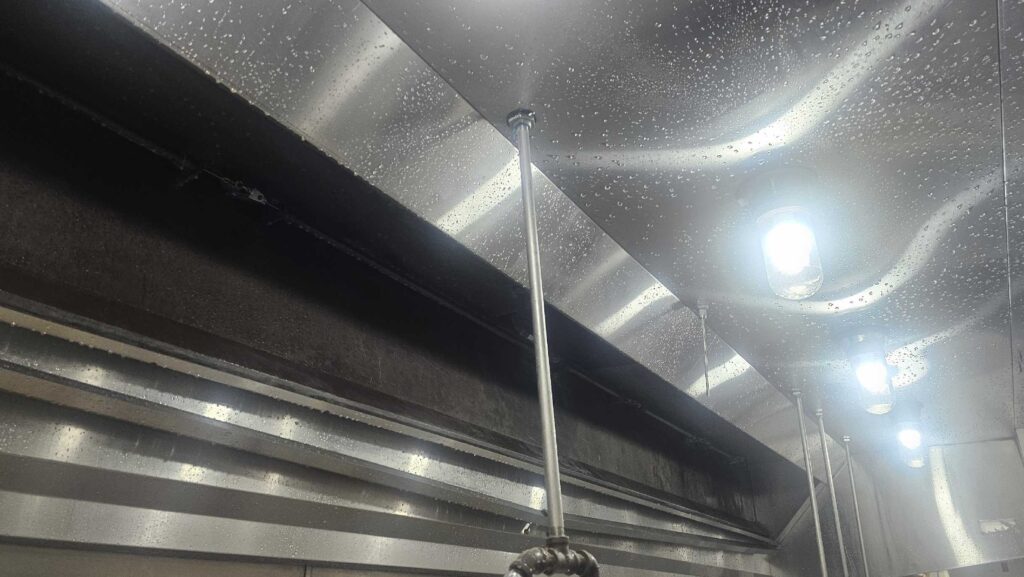
The hood canopy and the plenum chamber behind the baffle filters are the first areas inspectors examine. They’re looking for grease accumulation — specifically, grease that has built up beyond what’s considered acceptable under NFPA 96. Even light yellow or brown residue coating the inner surfaces of the plenum can trigger a notice. Inspectors are trained to spot the difference between a kitchen that was wiped down last night and one that received a proper, thorough cleaning.
2. Baffle Filters
Baffle filters are the removable panels that capture grease before it enters the duct system. Inspectors check that they’re in place (no missing filters), that they’re correctly installed, and that they’re not so clogged with hardened grease that airflow is restricted. Filters that haven’t been cleaned regularly become a fire risk on their own — grease-saturated filters ignite easily and can pull a flame directly into the ductwork.
3. Grease Ducts and Duct Access Panels
Inspectors don’t always physically enter the duct system, but they do look through access panels to assess grease levels inside. Under NFPA 96, grease ducts must be accessible for cleaning, and access panels must be present at specific intervals. A kitchen with inaccessible duct sections — or access panels that have been welded shut or painted over — creates an automatic compliance issue. Grease inside a duct that hasn’t been cleaned is a fire waiting for an ignition source.
4. Exhaust Fan (Rooftop Unit)
The exhaust fan sits at the top of the system and is one of the most commonly overlooked parts of a kitchen’s fire safety setup. Inspectors check for grease pooling around the fan motor housing, on the fan blades, and on the rooftop surface itself. A heavily grease-coated exhaust fan not only presents a fire hazard — grease dripping onto a hot motor is a real ignition risk — but it also signals that the rest of the duct system below likely hasn’t been properly serviced either.
5. Grease Containment on the Rooftop
Many Atlanta kitchens, especially older buildings in neighborhoods like Midtown, Inman Park, or the Old Fourth Ward, have rooftop grease issues that operators don’t even know about. Grease that escapes the exhaust fan pools on the rooftop surface, saturating the membrane and creating a slip hazard and a fire risk. Inspectors will sometimes check rooftop conditions, and excessive grease accumulation up there can factor into violations.
6. Service Documentation
This one catches a lot of operators off guard. The inspector isn’t just looking at the physical condition of the equipment — they want to see proof that the system has been professionally cleaned on a schedule. That means a service sticker affixed to the hood, and a cleaning report on file. Without documentation, even a hood that looks reasonably clean can result in a violation because there’s no way to confirm the cleaning met NFPA 96 standards.
Why Grease Buildup Is the Real Fire Hazard in Your Kitchen
To understand why Atlanta’s fire code takes hood cleaning so seriously, you have to understand what’s actually happening inside a busy commercial kitchen exhaust system.
Every time your cook fires up the charbroiler, drops a basket of fries, or runs the flattop, cooking vapors rise into the exhaust hood. Those vapors carry aerosolized grease particles. The baffle filters capture a large portion of those particles, but not all of them. The ones that get through deposit themselves on the inner walls of the duct system, on the exhaust fan blades, and on surfaces throughout the ventilation pathway.
Over days, weeks, and months, those deposits accumulate. Grease is flammable. When the layer inside a duct system gets thick enough, all it takes is a flare-up from below — a grease fire in a pan, a flaming piece of food, a burner that runs too hot — and the grease inside the duct can ignite. Once it does, a duct fire spreads fast and is extremely difficult to extinguish. Unlike a contained pan fire, a duct fire can travel the entire length of the exhaust pathway and exit through the rooftop fan, potentially spreading to the building structure.
According to the National Fire Protection Association, cooking equipment is the leading cause of fires in restaurants and food service establishments in the United States. Grease-related fires account for a significant share of those incidents, and the majority of the most damaging fires involve exhaust systems that hadn’t been serviced properly.
The Risk Is Real: Cooking equipment is the leading cause of U.S. restaurant fires, and grease accumulation in exhaust systems is a primary driver of the most serious incidents. Regular hood cleaning is not optional — it is the single most effective preventive measure a commercial kitchen can take. — National Fire Protection Association (NFPA)
NFPA 96: The Standard Behind Atlanta’s Hood Cleaning Requirements
NFPA 96 — the Standard for Ventilation Control and Fire Protection of Commercial Cooking Operations — is the foundation for virtually every hood cleaning requirement that Atlanta restaurant owners face. The Atlanta Fire Rescue Department adopts and enforces this standard as part of the Georgia State Minimum Standard Fire Code.
NFPA 96 is not a suggestion. It’s a legally enforceable fire code standard. Here’s what it covers and why it matters:
- Cleaning to bare metal. NFPA 96 requires that grease ducts, hoods, and exhaust systems be cleaned to a bare-metal standard — meaning all grease deposits must be removed, not just wiped down to look presentable. This is an important distinction that separates a compliant cleaning from a cosmetic one.
- Access for inspection and cleaning. The standard specifies that duct systems must be constructed to allow for cleaning and inspection. Kitchens that have been renovated without maintaining proper duct access can find themselves out of code, even if the equipment is relatively new.
- Grease collection devices. Hood systems must include proper grease cups, troughs, or containment systems that collect and hold drips from the filters. These collection devices must be emptied and cleaned regularly.
- Cleaning frequency based on cooking type. NFPA 96 doesn’t set a single frequency for all restaurants. Instead, it establishes a schedule based on how much and what type of cooking is being done. High-volume and high-temperature cooking operations require more frequent cleaning than low-volume ones.
- Documentation requirements. The standard requires that cleaning records be maintained and available for inspection. Service stickers affixed to the hood — showing the date of service and the name of the cleaning company — are part of this requirement.
One thing worth knowing: NFPA 96 is updated on a regular cycle. The 2024 edition is the most recently published version, and Atlanta inspectors apply the adopted version of the code. If your hood cleaning company isn’t familiar with the current version of NFPA 96, that’s worth asking about.
How Often Does Your Atlanta Restaurant Need Hood Cleaning?
This is one of the most common questions Atlanta restaurant operators ask, and the answer genuinely depends on what’s happening in your kitchen. NFPA 96 breaks it down by cooking type and volume, and Atlanta’s fire code aligns with this framework.
| Kitchen / Cooking Type | Minimum Cleaning Frequency (NFPA 96) |
| High-volume cooking (charbroiling, wok cooking, 24-hour ops) | Every 1 month |
| Moderate cooking (fryers, griddles, oven-heavy menus) | Every 3 months |
| Low-volume cooking (pizza, seasonal, limited hours) | Every 6 months |
| Very low-volume (churches, seasonal, day camps) | Annually |
What Does “High Volume” Actually Mean?
A high-volume kitchen in Atlanta is typically one that uses charbroilers, wok stations, or solid-fuel equipment (like wood-fired ovens) and operates for extended hours. Think of a popular Midtown steakhouse running two service seatings every night, a Chinese restaurant with multiple wok burners going six days a week, or a hotel banquet kitchen cranking out hot food for large events. These kitchens generate significantly more grease vapor than a café or sandwich shop, and their duct systems reflect that.
On the other end of the spectrum, a church kitchen that hosts a monthly potluck, a school cafeteria with a limited menu of oven-baked items, or a pizza shop that uses mostly convection ovens can often operate on a six-month or annual schedule without violating code — provided an actual assessment of their cooking operation supports that frequency.
When in doubt, schedule more frequently than you think you need to. A violation because your cleaning wasn’t frequent enough is far more costly than an extra service visit.
What Documentation Does the Inspector Expect to See?
Atlanta restaurant owners who pass inspections consistently share one thing in common: they have their paperwork in order. Documentation is the paper trail that proves your exhaust system is being maintained to code, and inspectors are trained to ask for it.
Here’s what you should have ready:
- Service sticker on the hood. A professionally applied sticker showing the date of the most recent cleaning and the name of the service company. This should be placed on a visible part of the hood near the access panel. Inspectors look for this immediately — its absence is an automatic red flag.
- Cleaning report or service manifest. A written report from the cleaning company detailing what was cleaned, the condition of the system before and after service, and confirmation that the cleaning met NFPA 96 requirements. Reputable hood cleaning companies provide this automatically.
- Before-and-after photos. Many professional hood cleaning companies now include time-stamped photographic documentation with their service reports. This is increasingly valuable during inspections because it gives the inspector visual confirmation of the scope of work performed — not just a piece of paper saying it was done.
- Previous service records. Inspectors may ask to see a history of cleaning records, not just the most recent one. Keeping a file of service reports going back at least 12 months is a good practice.
If your hood cleaning company doesn’t provide proper documentation after each service, it may be time to find one that does. A cleaning without documentation has no value during an inspection — you’re essentially starting from zero every time.
Who Needs Hood Cleaning? It Goes Beyond Traditional Restaurants
One of the most common misconceptions in Atlanta’s commercial kitchen industry is that hood cleaning only applies to full-service restaurants. That’s not accurate. NFPA 96 applies to any facility that operates commercial cooking equipment under a ventilation hood, regardless of the type of business. If you have a hood and a cooking appliance underneath it, you’re subject to the same fire code requirements as any other commercial kitchen.
Operations in Atlanta that regularly need professional hood cleaning include:
- Restaurants and food halls. The most obvious category, ranging from fast-food operations and food trucks to fine dining establishments and ghost kitchens.
- Hotels and resorts. Hotel kitchens — particularly those serving banquet facilities or hotel restaurants — often operate with high cooking volumes and have extensive exhaust systems. Many hotel operators in Atlanta discover during their first inspection that their kitchen cleaning schedule hasn’t matched their cooking volume.
- School cafeterias and university dining halls. Georgia’s colleges, universities, and K-12 schools operate commercial kitchens subject to the same fire code requirements. Annual cleaning is often sufficient given cooking volumes, but cafeterias that serve hot food daily may need more frequent service.
- Hospital and healthcare facility kitchens. Healthcare facilities in Atlanta — from Grady Memorial to the sprawling Piedmont Atlanta campus and dozens of outpatient facilities throughout the metro area — all operate commercial kitchens that require NFPA 96-compliant hood cleaning.
- Corporate and office cafeterias. Large employers with on-site cafeteria operations are subject to the same requirements as any other commercial kitchen. These facilities often go under-inspected simply because they’re not traditional restaurants, making compliance all the more important.
- Churches and religious facilities. Many churches in Atlanta operate commercial kitchens for events, outreach programs, and community meals. Even low-volume cooking operations need annual hood cleaning.
- Catering facilities and food trucks. Atlanta’s busy catering and mobile food scene presents unique challenges. Food trucks with hood systems are required to maintain them under the same fire code standards, though mobile cooking operations have their own inspection framework.
Common Reasons Atlanta Restaurants Fail Fire Inspections Related to Hood Cleaning
Understanding why kitchens fail inspections is just as useful as knowing what inspectors are looking for. The same issues come up repeatedly in Atlanta commercial kitchen inspections, and most of them are preventable.
Overdue or Skipped Cleanings
This is the most common failure. A busy restaurant skips a scheduled cleaning — maybe because of a busy weekend rush, staffing changes, or a miscommunication with the service company — and then gets inspected before the next cleaning was scheduled. One skipped cleaning in a high-volume kitchen can result in enough grease accumulation to trigger a violation.
Incomplete Cleanings
Not all hood cleaning is equal. Some operators cut costs by hiring the cheapest option available, only to discover that the “cleaning” involved wiping down the visible surfaces of the hood without touching the duct interior, exhaust fan, or rooftop components. A partial cleaning does not meet NFPA 96 requirements, and an inspector who finds grease inside the ducts will issue a violation regardless of whether a sticker says the hood was recently serviced.
No Documentation on File
Even if the physical cleaning was done properly, the lack of a service sticker or written documentation results in a code violation. This happens more often than you’d expect, particularly with newer restaurant operators who aren’t aware of the documentation requirement.
Inaccessible Duct Sections
Some Atlanta restaurant spaces — especially in older buildings in neighborhoods like Grant Park, Castleberry Hill, or the historic storefronts along Marietta Street — have ductwork that was installed before modern access requirements were standard. If sections of the duct system can’t be accessed for cleaning and inspection, the kitchen is out of code, and fixing the issue requires structural modifications.
Grease on the Rooftop
Rooftop grease accumulation that has been left unaddressed is increasingly a focus area during Atlanta fire inspections. When grease saturates a rooftop membrane and spreads across HVAC equipment or adjacent structures, it becomes a fire and liability issue that extends well beyond the kitchen.
Clogged or Damaged Filters
Baffle filters that are so heavily coated with grease that they restrict airflow are a violation. Filters that are cracked, bent, or missing gaps in coverage that allow unfiltered grease vapor to enter the duct system are also flagged. Filter maintenance should be happening between full hood cleanings — not just during them.
What Happens During a Professional Hood Cleaning?
A compliant, professional hood cleaning is a multi-step process that takes trained technicians several hours to complete. Understanding what should happen during a service visit helps Atlanta restaurant owners verify that they’re getting what they’re paying for.
- Preparation and protection. Before cleaning begins, the technicians cover your cooking equipment and kitchen surfaces with protective sheeting to prevent damage from water and cleaning agents.
- Filter removal and degreasing. Baffle filters are removed and soaked in a high-strength degreasing solution to break down accumulated grease. This is done separately so the filters can be thoroughly cleaned before being reinstalled.
- Hood and plenum cleaning. The interior of the hood canopy and the plenum chamber are scrubbed using commercial-grade degreasers and hot-water pressure washing equipment. The goal is bare metal — no residual grease film.
- Duct cleaning. Technicians access the duct system through the access panels and clean the interior duct walls. In longer or more complex duct runs, specialized cleaning equipment is used to reach sections that can’t be accessed directly.
- Exhaust fan cleaning. The rooftop exhaust fan is disassembled or tipped for access, and the fan blades, housing, and motor enclosure are cleaned of accumulated grease. Grease around the fan base on the rooftop surface is also removed.
- Grease containment and disposal. All collected grease is properly contained and removed from the property. Grease cannot simply be washed down the drain — proper disposal is part of the service.
- Documentation. After the cleaning is complete, the service sticker is affixed to the hood and a detailed service report — ideally with before-and-after photographs — is generated for the restaurant’s records.
One way to tell whether you’re working with a company that does the job properly: they should be at your kitchen for a meaningful amount of time. A crew that arrives and leaves in 45 minutes has almost certainly not cleaned the entire system from filters to rooftop fan.
Can You Clean Your Own Hood System? DIY vs. Professional Service
Restaurant owners often ask whether they can handle hood cleaning in-house as a way to cut costs. The honest answer is: your kitchen staff can and should be cleaning the exterior of the hood and the filter surfaces as part of daily or weekly kitchen maintenance. That routine cleaning is a good habit and reduces grease accumulation between professional service visits.
However, in-house cleaning does not satisfy the NFPA 96 requirement for professional hood cleaning. Here’s why:
- Equipment. Proper duct cleaning requires hot-water pressure washing equipment, commercial degreasers, and specialized tools that most kitchens don’t have. The degreasing and flushing process used by trained technicians is simply not replicable with household or restaurant cleaning supplies.
- Access. Staff members are generally not trained or equipped to safely access rooftop exhaust fans or interior duct systems. These are confined spaces and high areas that require appropriate safety protocols.
- Documentation. In-house cleaning cannot produce the third-party service documentation that NFPA 96 and Atlanta fire inspections require. A fire inspector who sees no professional service records will issue a violation regardless of how clean the hood looks.
- Liability. If a fire occurs and your records show that the system wasn’t professionally cleaned per the required schedule, your insurance coverage may be at risk. Insurers look at fire code compliance as a factor in covered losses.
The practical answer: keep up with daily filter cleaning and surface wipes as part of your standard kitchen operations. Schedule professional hood cleaning at the frequency required for your cooking volume. These two things work together, but the professional cleaning is the one that satisfies the fire code.
Frequently Asked Questions About Hood Cleaning and Fire Inspections in Atlanta
How much does hood cleaning cost in Atlanta?
Hood cleaning pricing in Atlanta varies based on the size of your system, the number of hoods, the cooking volume, and how recently the system was last cleaned. Systems that haven’t been serviced in a long time may require more labor and cleaning time. Most commercial kitchens in Atlanta can expect to pay anywhere from a few hundred dollars for a straightforward single-hood system to over a thousand dollars for a large, multi-hood setup with extensive ductwork. The best approach is to get a free estimate based on a description or walk-through of your kitchen.
How do I know if my restaurant is due for a hood cleaning?
Check the service sticker on your hood — it shows the date of the last professional cleaning. Then compare that date against the frequency required for your type of kitchen under NFPA 96. If you’re overdue, schedule service before your next inspection. If you can’t find a service sticker or don’t have documentation from the last cleaning, treat yourself as overdue.
Do food trucks in Atlanta need hood cleaning?
Yes. Food trucks and mobile food units that use cooking equipment under a hood system are subject to the same NFPA 96 requirements as brick-and-mortar kitchens. Atlanta’s mobile food unit permitting process includes fire safety inspections, and an unclean or unmaintained hood system can affect a food truck’s ability to operate.
What happens if I fail a fire inspection in Atlanta?
The Atlanta Fire Rescue Department can issue a notice of violation with a deadline for correction. In serious cases — where immediate fire risk is present — an inspector has the authority to require a kitchen to cease cooking operations until the issue is corrected. Repeated violations can result in fines. Beyond the legal consequences, an uncleaned exhaust system significantly increases the risk of a kitchen fire that could destroy your equipment, injure your staff, and close your business permanently.
Can I schedule hood cleaning at night or on weekends?
Yes, and this is actually the preferred approach for most Atlanta restaurants. Hood cleaning is best done when the kitchen is not in service — after the last service of the night or on a day when the kitchen is closed. Reputable hood cleaning companies in Atlanta accommodate off-hours scheduling, including late nights and weekends, to minimize disruption to your operations.
What’s the difference between hood cleaning and kitchen exhaust cleaning?
These terms are often used interchangeably, but a proper kitchen exhaust cleaning covers the entire exhaust system — from the hood canopy and filters to the grease ducts, access panels, and rooftop exhaust fan. A service that only cleans the visible part of the hood without touching the duct interior and fan is not a compliant exhaust cleaning under NFPA 96. When you schedule service, confirm that the entire system will be cleaned, not just the hood itself.
Does my hood cleaning company need any certifications?
Atlanta doesn’t require a specific state license for hood cleaning companies the way some states do, but working with a company that follows NFPA 96 protocols and carries proper liability insurance is important for your own protection. Ask any prospective cleaning company whether they clean to bare metal, whether they provide full documentation, and what their insurance coverage looks like. A company that can’t answer those questions confidently isn’t one you want servicing your kitchen.
How long does a hood cleaning take?
This depends heavily on the size and complexity of your exhaust system. A single hood with a straightforward duct run in a small restaurant might take two to four hours. A large hotel kitchen or multi-hood restaurant with extensive ductwork can take significantly longer. If a cleaning company is in and out in less than an hour on anything but the smallest system, it’s worth asking what exactly was cleaned.
Schedule Your Hood Cleaning with Premier Grease
Running a restaurant in Atlanta is demanding enough without having to worry about fire code violations. Premier Grease has been working with commercial kitchens across the Atlanta metro since 2001, and we’ve handled everything from single-hood quick-service restaurants to multi-kitchen hotel operations and university dining facilities.
Every service we perform is done to NFPA 96 standards — bare metal clean, from the filters to the rooftop fan. After each visit, you’ll receive a detailed service report with time-stamped before-and-after photographs and a service sticker for your hood, giving you everything the Atlanta Fire Rescue Department expects to see during an inspection.
We don’t require contracts. We show up on time, we clean the entire system, and we give you the documentation that protects your business. That’s been our approach for over two decades, and it’s why Atlanta restaurant operators keep calling us back.