
Article Summary
- The City of Atlanta enforces NFPA 96 compliance for every commercial kitchen operating within its jurisdiction — not just restaurants, but hotels, hospitals, schools, food trucks, and any facility using commercial cooking equipment under a hood.
- NFPA 96 is not a recommendation. It is a legally adopted fire safety standard that carries the weight of Georgia law, and the Atlanta Fire Rescue Department has the authority to shut down a kitchen that isn’t in compliance.
- Documentation is what separates a compliant kitchen from one that simply looks compliant — without a service sticker, a cleaning report, and a verifiable service history, your kitchen has no legal proof of compliance even if the equipment looks clean.
- The reasons Atlanta requires documented compliance go beyond fire prevention — they include liability protection, insurance enforceability, and the city’s obligation to protect workers, neighboring businesses, and the broader public.
- Many Atlanta restaurant operators don’t fully understand what documented compliance actually requires until they’re standing in front of an inspector who’s asking for paperwork they don’t have.
- This article explains the legal framework, the documentation requirements, the consequences of non-compliance, and why professional hood cleaning is the most direct path to maintaining a defensible compliance record.
The Question Behind the Question
When Atlanta restaurant operators ask why the city requires documented NFPA 96 compliance, what they’re usually really asking is one of two things. Either they’ve just been cited for a documentation violation and they want to understand what they actually did wrong, or they’re trying to figure out whether they can satisfy the requirement without going through the trouble of scheduling and maintaining professional hood cleaning records.
The answer to the second version of that question is no. And understanding why requires looking at what NFPA 96 compliance documentation actually is, what legal authority sits behind it, and what the City of Atlanta is trying to accomplish by requiring it.
This isn’t paperwork for the sake of paperwork. The documentation requirement exists because grease fires in commercial kitchens are genuinely dangerous, because the risk is directly tied to maintenance practices that can’t always be verified by looking at a hood, and because Atlanta — like every major U.S. city with a serious commercial kitchen sector — has learned through experience that compliance without documentation is compliance that can’t be confirmed, enforced, or defended.
The Legal Framework: How NFPA 96 Became Atlanta Law
To understand why Atlanta requires documented NFPA 96 compliance, you need to understand how the standard became law in the first place. NFPA 96 is a document published by the National Fire Protection Association — a nonprofit organization that develops and maintains fire safety codes and standards used throughout the United States and in many countries internationally. NFPA itself has no enforcement authority. It writes the standard; governments adopt it.
Georgia adopts fire and building standards through the Georgia State Minimum Standard Codes framework, administered by the Georgia Department of Community Affairs. When Georgia formally adopts NFPA 96 as part of the Georgia State Minimum Fire Code, the standard becomes legally enforceable throughout the state. Every jurisdiction in Georgia — including the City of Atlanta — must enforce the state minimum standard at minimum, and may adopt stricter local amendments if they choose.
The Atlanta Fire Rescue Department is the authority having jurisdiction within city limits for commercial fire code enforcement. When an Atlanta fire inspector cites a restaurant for a violation of NFPA 96, they’re citing a violation of Georgia state law as adopted and enforced locally. The legal chain runs from the NFPA standard through state adoption through local enforcement, and it carries real consequences at every level.
This matters because it’s sometimes tempting to think of fire code compliance as a local regulatory preference — something that might vary from city to city based on priorities or politics. That framing underestimates the seriousness of what’s actually at stake. NFPA 96 was developed over decades, through the analysis of commercial kitchen fire incidents, injuries, fatalities, and property losses across the country. Its requirements aren’t arbitrary. They reflect what the evidence shows is necessary to prevent commercial kitchen fires.
What NFPA 96 Actually Requires — The Full Picture
Before getting to the documentation requirement specifically, it’s worth understanding the full scope of what NFPA 96 governs. The standard is broader than most kitchen operators realize, and its documentation requirement makes the most sense in the context of the entire system it’s designed to protect.
NFPA 96 applies to the design, installation, operation, inspection, and maintenance of all commercial cooking operations. That includes:
The Exhaust System
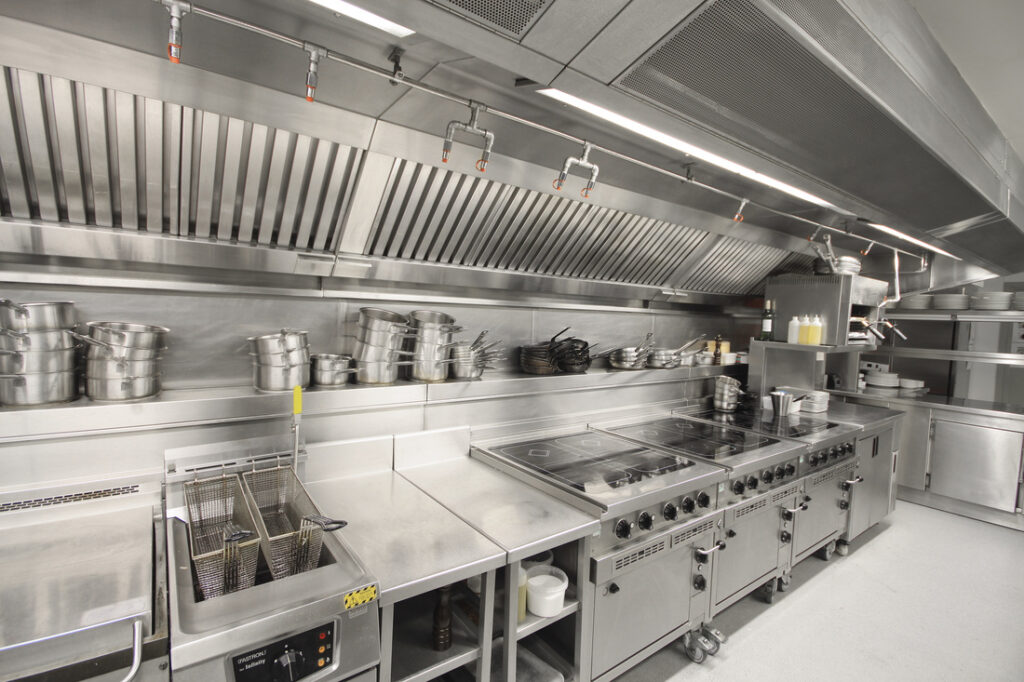
The standard covers the entire exhaust pathway from the cooking surface to the outside of the building — the hood canopy, baffle filters, grease collection devices, duct system, exhaust fan, and rooftop discharge. It specifies construction materials, minimum duct wall gauges, welding requirements for duct joints, access panel locations, clearance distances from combustible materials, and the required performance characteristics of listed hood assemblies.
Grease Removal and Cleaning
This is the section that most directly affects day-to-day restaurant operations. NFPA 96 specifies that the entire exhaust system must be cleaned to a bare-metal standard — all grease deposits removed from hood surfaces, duct interiors, and the exhaust fan — at frequencies determined by cooking type and volume. The cleaning must be performed by qualified personnel using appropriate equipment. The results must be documented.
Fire Suppression Systems
NFPA 96 addresses the automatic fire suppression systems installed within hood assemblies, including design requirements, coverage specifications, maintenance intervals, and testing requirements. The suppression system and the exhaust system are treated as an integrated fire protection assembly.
Cooking Equipment and Fuel Systems
The standard covers the clearance requirements between cooking equipment and combustible materials, requirements for fuel supply shut-offs, and equipment design standards relevant to fire safety.
Operations and Maintenance
This section establishes the ongoing obligations of kitchen operators — not just the one-time installation requirements, but the maintenance schedule, inspection requirements, and the documentation practices that prove the system is being maintained as required.
The documentation requirement doesn’t live in isolation. It’s the mechanism by which NFPA 96’s ongoing maintenance requirements can be verified. Without it, the cleaning requirements of the standard become unenforceable.
Why Documentation — Not Just Cleaning — Is the Requirement
This distinction is worth examining carefully because it’s where a lot of Atlanta restaurant operators run into trouble. The assumption is that if the kitchen is clean, documentation is a technicality. In fact, documentation is a substantive requirement, and here’s why.
The Inspector Can’t Verify What They Can’t See
A commercial kitchen exhaust system contains hundreds of linear feet of enclosed ductwork that an inspector cannot fully view during a routine inspection. They can look through access panels at portions of the duct interior. They can assess the hood and plenum. They can look at the rooftop fan. But they cannot see the interior condition of every section of your duct system.
This creates an obvious verification problem. A duct system that appears clean at the access panel inspection points might have significant grease accumulation in sections that weren’t accessible. Or it might have been wiped down at the access points specifically because an inspection was expected. Documentation from a professional cleaning company that performed a full-system service is the only way to establish that the inaccessible portions of the system were actually cleaned.
The Cleaning Quality Can’t Be Determined Visually After the Fact
Not all cleaning is equal. A kitchen that hired the cheapest available service — one that wiped down hood surfaces without touching the duct interior or the exhaust fan — might look superficially similar to one that received a full NFPA 96-compliant cleaning. The service report from a compliant cleaning documents the scope of work performed: what was cleaned, what products were used, what the condition was before and after, and whether the work met NFPA 96 standards. A visual inspection of the hood alone can’t establish any of that.
The Cleaning Frequency Can’t Be Inferred from Current Condition
An inspector who sees a reasonably clean hood has no way of knowing whether it was cleaned three weeks ago, three months ago, or eighteen months ago. The service sticker and service history are the only evidence of whether the cleaning frequency has been appropriate for the kitchen’s cooking volume. A kitchen that was cleaned six months ago but should have been cleaned monthly has been out of compliance for five of those months — even if the hood looks acceptable on inspection day.
Documentation Creates an Accountability Chain
When a professional hood cleaning company performs NFPA 96-compliant service and provides documentation, they’re creating a record that can be traced. The cleaning company is identifiable. The date is recorded. The scope of work is described. If something is claimed in the report that didn’t actually happen — if the company documented a full duct cleaning they didn’t perform — there is a documented record that can be reviewed, and there are legal and professional consequences for fraudulent documentation. This accountability structure doesn’t exist when operators self-report their own cleaning practices.
The Four Pillars of NFPA 96 Compliance Documentation
When Atlanta fire inspectors look at compliance documentation, they’re looking for evidence across four specific areas. Understanding each one helps operators build a documentation system that actually satisfies the requirement rather than creating the appearance of compliance without the substance.
Pillar 1: The Service Sticker
NFPA 96 requires that after each professional cleaning, a service sticker be affixed to the hood in a visible location — typically near the access panel or on the hood face. The sticker must include at minimum the date of service and the name of the company that performed the cleaning. Some stickers also include the next scheduled service date, the technician’s name, and a contact number.
The sticker serves as the first-pass compliance check during an inspection. An inspector can see within seconds whether a service sticker exists, how old it is, and whether the date falls within the required cleaning interval for the kitchen’s cooking type. A missing sticker is an immediate flag. A sticker showing a date that makes the service overdue based on the kitchen’s cooking volume is also a flag.
What the sticker doesn’t do on its own is prove that the cleaning was comprehensive. It proves a service occurred on a given date. The service report provides the substance behind the sticker.
Pillar 2: The Service Report or Manifest
The service report is the detailed documentation of what the cleaning actually covered. A compliant service report from a professional hood cleaning company should document:
- The name and address of the facility serviced
- The date of service
- The name of the cleaning company and the technician(s) who performed the work
- A description of all components cleaned: hood canopy, plenum, baffle filters, grease collection devices, grease ducts (including the extent of duct cleaning and access points used), exhaust fan, and rooftop components
- The condition of the system before cleaning — noting any areas of heavy grease accumulation, damaged components, or access limitations
- The condition of the system after cleaning — confirmation that the work met NFPA 96 bare-metal standards or documentation of any areas that couldn’t be fully cleaned due to access limitations
- A statement that the cleaning was performed in accordance with NFPA 96
This report is what an inspector asks to see when they want to understand what actually happened during a cleaning, not just whether one occurred.
Pillar 3: Photographic Documentation
While NFPA 96 doesn’t mandate photographic documentation as a standalone requirement, it has become the professional standard in the hood cleaning industry and is increasingly expected by Atlanta fire inspectors as part of a credible compliance record. Time-stamped before-and-after photographs of the hood interior, plenum, exhaust fan, and rooftop components provide visual proof of the system’s condition before and after service.
Photographs serve several practical purposes beyond the inspection itself. They establish a baseline condition that makes it easier to identify areas of rapid grease buildup that might indicate a cleaning frequency problem. They provide evidence in the event of an insurance claim. And they’re the clearest possible demonstration to an inspector that a cleaning company did what the service report says they did.
Any professional hood cleaning company operating in Atlanta in 2026 should be providing time-stamped photographic documentation as a matter of standard practice. If yours isn’t, that’s worth addressing.
Pillar 4: Service History
The inspection-day documentation — the sticker and the most recent service report — establishes current compliance. The service history establishes ongoing compliance. Inspectors may ask to review records from previous cleanings, not just the most recent one, to assess whether the cleaning frequency has been appropriate over time.
A restaurant with a service history showing quarterly cleanings when its cooking operation requires monthly service has been out of compliance continuously, even if the hood was cleaned within the past quarter. The history makes the frequency pattern visible in a way that a single service record cannot.
Maintaining service records for a minimum of 12 months — and ideally for the life of the restaurant’s current ownership — is a practical standard that protects the operator and provides meaningful documentation depth.
Why Atlanta Specifically Prioritizes This Requirement
The City of Atlanta has particular reasons to take commercial kitchen fire safety seriously, beyond the general obligation to enforce Georgia’s state minimum codes. Atlanta is a city with a large and diverse food service sector, a significant stock of older commercial buildings that present fire containment challenges, and a density of mixed-use development that means a restaurant fire doesn’t just threaten the restaurant — it threatens everyone and everything around it.
The Scale of Atlanta’s Commercial Kitchen Sector
Atlanta is home to thousands of commercial cooking establishments — from the concentrated restaurant density along the Beltline and in neighborhoods like Midtown, Buckhead, and Inman Park, to the institutional kitchens in the city’s hospitals, universities, hotels, and corporate campuses. The Atlanta metro area’s food and hospitality industry is one of the largest employers in the region. The city has a direct interest in the fire safety practices of an industry this size.
The Building Stock Challenge
A significant portion of Atlanta’s restaurant spaces are located in buildings that were originally constructed for other purposes — converted warehouses in the West Midtown and Westside areas, historic storefronts along Ponce de Leon and Marietta Street, older mixed-use buildings throughout neighborhoods like Grant Park, Castleberry Hill, and the Old Fourth Ward. These spaces often have ductwork configurations, ceiling heights, and structural characteristics that make fire containment more challenging than a purpose-built restaurant facility.
In older buildings, a duct fire that escapes the exhaust system has more opportunities to find combustible building materials — wood framing, older ceiling assemblies, unprotected structural elements — than it would in a modern commercial construction. The fire risk from an unmanaged exhaust system is meaningfully higher in these environments, and Atlanta has enough of these spaces to make it a genuine city-level concern.
Neighboring Business Liability
Atlanta’s commercial districts are dense. A fire that starts in a commercial kitchen exhaust system and spreads to the building structure doesn’t stay contained to the kitchen. It can spread to adjacent retail spaces, upstairs residential units, neighboring restaurants, and connected structures. The City of Atlanta has a legal and practical obligation to prevent fires that threaten not just the business where they start but the surrounding community.
The documented NFPA 96 compliance requirement is one of the tools the city uses to discharge that obligation. When every commercial kitchen in Atlanta is required to maintain and produce documentation of compliant exhaust system maintenance, the overall fire risk in those dense commercial corridors is meaningfully reduced.
Worker Protection
Commercial kitchen workers are among the employees most directly exposed to the consequences of exhaust system failures. Kitchen fires injure and kill workers every year across the United States. The staff working a Friday dinner service don’t have the option to leave if the operator hasn’t maintained the exhaust system properly — they’re in the building, doing their jobs, and trusting that the infrastructure around them meets the safety standards it’s supposed to meet.
Atlanta’s enforcement of documented NFPA 96 compliance is, among other things, a worker safety measure. The documentation requirement creates accountability structures that protect employees who might otherwise have no visibility into whether the kitchen they work in is being maintained properly.
What Happens When Documentation Is Missing or Incomplete
The consequences of failing to maintain documented NFPA 96 compliance in Atlanta range from administrative inconveniences to serious legal and financial exposures. Understanding the full range of potential consequences helps put the documentation requirement in proper perspective.
Notice of Violation and Required Correction
The most common immediate consequence of a documentation failure during an Atlanta fire inspection is a notice of violation with a correction deadline. The inspector documents the specific deficiency — missing service sticker, no cleaning report on file, cleaning records showing an overdue schedule — and the operator is given a defined period to correct the problem and demonstrate compliance at a re-inspection.
For documentation-only failures where the physical condition of the equipment appears acceptable, the correction period is typically 30 days or more. For documentation failures combined with visible grease accumulation or other physical violations, the timeline is often shorter, and the consequences more serious.
Required Suspension of Cooking Operations
When an Atlanta fire inspector identifies a combination of physical violations and documentation failures that together indicate a significant immediate fire hazard, they have the authority to require a kitchen to cease cooking operations until the hazard is corrected. This is not a theoretical outcome — it happens in Atlanta commercial kitchens. A restaurant that loses its ability to cook during a busy weekend, or that has to close for several days while emergency remediation is performed, faces financial losses that dwarf the cost of maintaining proper compliance in the first place.
Re-inspection Fees and Escalating Scrutiny
Kitchens that fail inspections are subject to re-inspections, which may carry associated fees. More significantly, a kitchen with a history of violations receives elevated scrutiny in subsequent inspections — both in terms of inspection frequency and in terms of how closely the inspector examines compliance details. An operator who has been cited for documentation failures multiple times is not going to receive the benefit of the doubt on borderline issues in future inspections.
Insurance Coverage Exposure
Commercial property and liability insurance policies for restaurants typically require that the insured maintain the property in compliance with applicable fire codes. A fire that occurs in a kitchen where NFPA 96 compliance documentation was not being maintained gives the insurer grounds to investigate whether the fire was connected to the compliance failure — and depending on the findings, to contest or limit coverage.
This exposure goes beyond the fire event itself. An insurer conducting a post-fire investigation who finds no service stickers, no cleaning reports, and no verifiable history of professional hood cleaning has documentary evidence that the policy’s compliance maintenance requirement was not being met. The legal and financial consequences of a contested insurance claim following a kitchen fire can far exceed the value of whatever was lost in the fire itself.
Personal Liability for Ownership and Management
Restaurant owners and operators in Georgia can face personal liability for fires that occur as a result of code violations they knew about or should have known about. The documented nature of NFPA 96 compliance requirements — the specific obligation to maintain and produce records — means that a failure to comply is difficult to characterize as an oversight. If a fire investigation reveals that an exhaust system hadn’t been professionally cleaned in 18 months and no documentation exists, the owner’s prior knowledge of the compliance requirement becomes a significant factor in any civil litigation that follows.
Who Is Covered: Every Kitchen, Not Just Restaurants
One of the most important things to understand about Atlanta’s enforcement of NFPA 96 documentation requirements is that it applies to every commercial cooking operation in the city — not just traditional restaurants. The standard applies based on the equipment being operated and the presence of a commercial exhaust hood system, not based on the type of business or whether food is sold to the public.
In practice, this means documented NFPA 96 compliance is required for:
Full-service restaurants and fast-casual operations of any size or cuisine type. This includes ghost kitchens and delivery-only commercial cooking operations — the absence of a public dining room doesn’t change the fire code obligation.
Hotels with food and beverage operations. A hotel in Midtown Atlanta with a restaurant, a banquet kitchen, a room service operation, and an employee cafeteria may have four or more separate commercial kitchen exhaust systems, each requiring its own compliant maintenance and documentation program.
Hospitals and healthcare facilities. Grady Memorial Hospital, the Piedmont Atlanta campus, Emory University Hospital, and dozens of other Atlanta-area healthcare facilities operate commercial kitchens subject to the same NFPA 96 requirements as any restaurant. Healthcare facility compliance is particularly important because an evacuation caused by a kitchen fire in a hospital creates patient safety risks beyond the fire itself.
University and K-12 school cafeterias. Georgia Tech, Emory, Georgia State, Clark Atlanta, Morehouse, Spelman, and the dozens of Atlanta public and private K-12 schools all operate commercial kitchens. Annual cleaning is often sufficient for lower-volume school operations, but documented compliance is required regardless of cooking volume.
Corporate and office cafeterias. Major Atlanta employers with on-site food service operations — including the numerous corporate headquarters and office campuses throughout Buckhead, the Perimeter, and Midtown — operate commercial kitchens subject to NFPA 96.
Churches and religious facilities. Atlanta has a dense network of churches, mosques, temples, and other religious facilities that operate commercial kitchens for community events, outreach programs, and regular food service. Even low-volume cooking operations require annual professional cleaning and documentation.
Sports and entertainment venues. State Farm Arena, Mercedes-Benz Stadium, Truist Park, and Atlanta’s other major venues operate massive commercial kitchen operations during events. These high-volume facilities require correspondingly frequent professional service and detailed documentation.
Food trucks and mobile food units. Atlanta’s active food truck scene is subject to the same basic NFPA 96 requirements as fixed commercial kitchens. Mobile food unit operating permits in Atlanta include fire safety review, and a food truck with an unmaintained exhaust system can lose its operating permit.
How Professional Hood Cleaning Creates a Defensible Compliance Record
The phrase “defensible compliance record” is worth unpacking because it captures what documented NFPA 96 compliance is really trying to accomplish. A defensible record is one that can withstand scrutiny — from a fire inspector, from an insurance adjuster, from an attorney, from a regulatory agency. It’s documentation that holds up not just on a good day but under pressure.
Creating a defensible compliance record for your Atlanta commercial kitchen requires working with a professional hood cleaning company that understands what the documentation standard actually requires and consistently delivers it. Here’s what that looks like in practice:
The cleaning company is qualified and experienced with NFPA 96. They understand what “bare metal clean” means and what it requires in practice. They don’t skip sections of the system because they’re inconvenient to access. They clean the hood, the duct interior, and the exhaust fan — the entire exhaust pathway — not just the visible surfaces.
The service sticker is properly completed and affixed. The sticker shows the correct date, the company name, and is placed in a visible location on the hood where an inspector can find it immediately.
The service report is detailed and specific. It describes what was cleaned, the condition before and after, any areas of concern, and confirmation that the work was performed to NFPA 96 standards. It’s signed and dated. It includes contact information for the cleaning company.
Photographic documentation is provided with every service. Time-stamped before-and-after photos of the hood interior, plenum, exhaust fan, and rooftop are attached to the service report.
The cleaning frequency is appropriate for the kitchen’s actual cooking volume. The company assesses your cooking operation and schedules service at the interval required by NFPA 96 for your specific situation — not a generic interval that may or may not match your actual grease production.
Records are consistent and gap-free. Service history shows a regular pattern of cleaning at the correct frequency, with no unexplained gaps that would suggest missed services.
When your documentation meets all of these criteria, an Atlanta fire inspector asking to see your compliance records is an uneventful part of the inspection — not a moment of uncertainty about what they’re going to find.
The Real Cost of Non-Compliance vs. The Cost of Compliance
Restaurant operators working on tight margins sometimes look at the cost of professional hood cleaning and documentation and treat it as a place to economize. That framing doesn’t hold up when you look honestly at the cost comparison.
The cost of professional hood cleaning in Atlanta varies by system size and cleaning frequency, but most commercial kitchens are looking at a manageable expense per service visit — one that, when spread across the year, represents a small fraction of a restaurant’s operating costs.
The cost of non-compliance, by contrast, stacks up quickly:
A single re-inspection fee following a documentation violation is a direct cash cost. Lost revenue during a mandated closure — even a few days — for a busy Atlanta restaurant can run into tens of thousands of dollars. Emergency hood cleaning at premium rates, when a kitchen has to be cleaned immediately before a re-inspection, costs significantly more than scheduled service. The legal costs of responding to an insurance claim dispute following a fire are substantial. Civil liability exposure in the event of a fire caused by a non-compliant exhaust system is unlimited.
Beyond the financial arithmetic, there’s the business continuity question. An Atlanta restaurant that gets shut down during a busy service period — during a Braves game week, during restaurant week, during the holiday season — doesn’t just lose the revenue from that closure. It loses the reputation damage that comes with a public compliance failure, the staff disruption of an unexpected shutdown, and the customer relationships that may not fully recover.
The economics of documented NFPA 96 compliance are straightforward: the cost of consistent, professional service and proper documentation is small relative to the cost of any single significant compliance failure.
Frequently Asked Questions About NFPA 96 Documentation Requirements in Atlanta
Is a cleaning receipt from my hood cleaning company enough, or do I need a formal service report?
A receipt that shows a service date and a charge for hood cleaning is not sufficient documentation for NFPA 96 compliance purposes. You need a formal service report that describes what was cleaned, confirms NFPA 96 compliance, and provides the contact information for the cleaning company. A receipt proves a payment was made — it doesn’t prove a compliant cleaning was performed.
What if I can’t locate records from previous hood cleanings?
Contact your previous cleaning company — most maintain their own service records and can provide copies. If you’ve changed cleaning companies or can’t locate older records, the practical approach is to establish a clean documentation baseline: schedule a compliant professional cleaning, obtain full documentation, and maintain records going forward. Inspectors understand that documentation histories aren’t always perfectly preserved, particularly after ownership changes, but they’ll expect to see current compliance.
Does the documentation requirement apply differently to new restaurants?
New restaurant openings in Atlanta involve fire code review as part of the permitting process. Before a new commercial kitchen can open, the exhaust system installation must be inspected and approved. After opening, the ongoing cleaning and documentation requirements of NFPA 96 apply immediately — from the first day of cooking operations. New operators sometimes assume there’s a grace period before compliance documentation is required. There isn’t.
Can I keep my service records digitally, or do I need physical copies?
Atlanta fire inspectors primarily want to be able to review your documentation when asked. Whether that documentation is maintained in a physical binder or in a digital format accessible on a tablet or laptop at the restaurant is generally not the core issue — what matters is that complete, organized records exist and can be produced during an inspection. Practically speaking, having both a physical copy of the most recent service report on premises and digital backups is the most defensible approach.
What if my hood cleaning company says they don’t provide service reports?
Find a different hood cleaning company. A professional service provider performing NFPA 96-compliant cleaning should provide documentation as a matter of standard practice — not as an optional add-on. A company that doesn’t provide service reports isn’t equipped to support your compliance needs, and using them exposes you to the same documentation violations as not scheduling cleaning at all.
Does the size of my restaurant affect the documentation requirement?
No. The documentation requirement applies to all commercial cooking operations with a commercial exhaust hood, regardless of size. A food truck with a single hood and a single fryer has the same obligation to maintain documented NFPA 96 compliance as a 300-seat hotel restaurant with multiple hood systems. The scale of the documentation logistically differs, but the requirement itself does not.
How long do I need to keep hood cleaning records?
NFPA 96 doesn’t specify a precise retention period for cleaning records in the same way some record-keeping regulations do. Practically speaking, maintaining records for at least 12 months gives you a full year of compliance history to present during any inspection. Many Atlanta operators maintain records for the duration of their current ownership or lease term, which provides the most robust protection in the event of a fire investigation or insurance claim.
What if I disagree with an inspector’s documentation violation?
You have the right to request a formal written interpretation of the code provision being cited, and you can appeal a violation through the Atlanta Fire Rescue Department’s established process. If the dispute involves a significant financial consequence — a required closure or a substantial remediation cost — engaging a licensed fire protection engineer or a qualified code consultant to review the inspector’s citation is a reasonable step. That said, if the violation is a genuine documentation failure — no service sticker, no service report, an overdue cleaning schedule — the path of least resistance is to correct the deficiency rather than dispute the citation.
The Takeaway: Documentation Is Compliance
The documentation requirement in NFPA 96 isn’t a bureaucratic layer on top of the real compliance requirement. It is the compliance requirement — the mechanism by which fire code standards for commercial kitchen exhaust maintenance can actually be verified, enforced, and relied upon.
Atlanta requires documented NFPA 96 compliance for all kitchens because a city with thousands of commercial cooking operations, a significant stock of older buildings, and a dense commercial landscape cannot rely on visual inspections alone to maintain fire safety. Documentation creates the accountability structure that makes the system work.
For Atlanta restaurant operators, the practical implication is simple: work with a professional hood cleaning company that delivers genuine NFPA 96-compliant service and provides complete documentation with every visit. Schedule service at the correct frequency for your cooking operation. Maintain your records. Know where they are when an inspector asks.
That’s documented compliance. And it’s what the City of Atlanta requires — for good reason.
Let Premier Grease Handle Your NFPA 96 Documentation the Right Way
Premier Grease has been serving commercial kitchens across the Atlanta metro area since 2001. Every service we perform is built around NFPA 96 compliance from start to finish — bare-metal cleaning of the complete exhaust system, a detailed service report, time-stamped before-and-after photographs, and a properly completed service sticker on your hood.
When your next Atlanta fire inspection comes around, you’ll have the documentation package that inspectors look for: a current sticker, a complete service report, photographic proof of the cleaning, and a service history that shows consistent, frequency-appropriate maintenance.
No contracts. Licensed, bonded, and insured with $5 million in general liability coverage. We serve restaurants, hotels, hospitals, schools, food trucks, and every other type of commercial kitchen operation in the Atlanta area — and we schedule service around your hours so cleaning happens when your kitchen is down, not when it’s in the middle of service.