
Article Summary
- A commercial hood cleaning service covers far more than the visible hood above the cooking equipment. A complete, professional service addresses every component in the exhaust pathway from the hood canopy to the rooftop exhaust fan.
- The scope of what’s included varies significantly between providers in Atlanta, and the components most commonly left out of incomplete services are the ones that create the most serious fire risk when they go uncleaned.
- NFPA 96, the standard that Atlanta fire inspectors enforce for commercial kitchen exhaust systems, establishes a bare-metal cleaning standard that applies to the complete exhaust system, not just the components visible from the kitchen floor.
- Understanding exactly what each component does and why it needs to be cleaned gives Atlanta restaurant operators the context to evaluate whether a cleaning quote covers what compliance requires or falls short of it.
- Documentation is a required deliverable of a professional cleaning service, not an optional extra. Service stickers, service reports, and before-and-after photographs are all part of what a compliant cleaning produces.
- This article explains every component typically included in a professional commercial hood cleaning service and what the cleaning of each component actually involves, so Atlanta operators know precisely what they should be receiving from every service visit.
- Because uncleaned components and hidden ductwork pose significant fire hazards while risking NFPA 96 compliance, learning how to compare hood cleaning quotes in Atlanta helps operators verify the full scope of service and avoid incomplete cleanings.
Why Knowing What’s Included Matters
Most Atlanta restaurant operators schedule hood cleaning because they know it’s required. The fire inspector expects it. The NFPA 96 standard mandates it. The service sticker on the hood is evidence it happened. But knowing that hood cleaning is required and knowing exactly what a compliant hood cleaning service includes are two different things, and the gap between them is where compliance failures most frequently develop.
The phrase “hood cleaning” is part of the problem. It implies a service focused on the hood, the visible canopy above the cooking equipment that most operators think of when they think about exhaust system maintenance. In reality, the hood is only one component of a complete exhaust system, and the components that present the most serious fire risk are the ones that aren’t visible from the kitchen floor during normal service.
A professional commercial hood cleaning service covers the entire exhaust pathway, from the cooking surface to the rooftop discharge. Every component in that pathway accumulates grease during cooking operations, and every component needs to be cleaned to bare metal to satisfy NFPA 96’s requirements. A service that cleans some components but skips others isn’t a compliant cleaning, regardless of what the sticker on the hood says.
This article works through every component included in a complete commercial hood cleaning service, explains what each component does and why it accumulates grease, and describes what the cleaning of each component involves. By the end, Atlanta restaurant operators should be able to look at any hood cleaning quote or service description and evaluate immediately whether it covers what compliance actually requires.
The Exhaust System: A Component-by-Component Overview
Before getting into what cleaning each component involves, it helps to understand how the components connect to each other as a system. Grease-laden air from the cooking surface travels upward through the hood into the plenum, through the baffle filters, into the duct system, through the ductwork to the rooftop, and out through the exhaust fan. At every stage of this journey, grease deposits on the surfaces it contacts.
A complete hood cleaning service addresses every stage of that journey. Here’s what that means for each component.
The Hood Canopy
What It Is
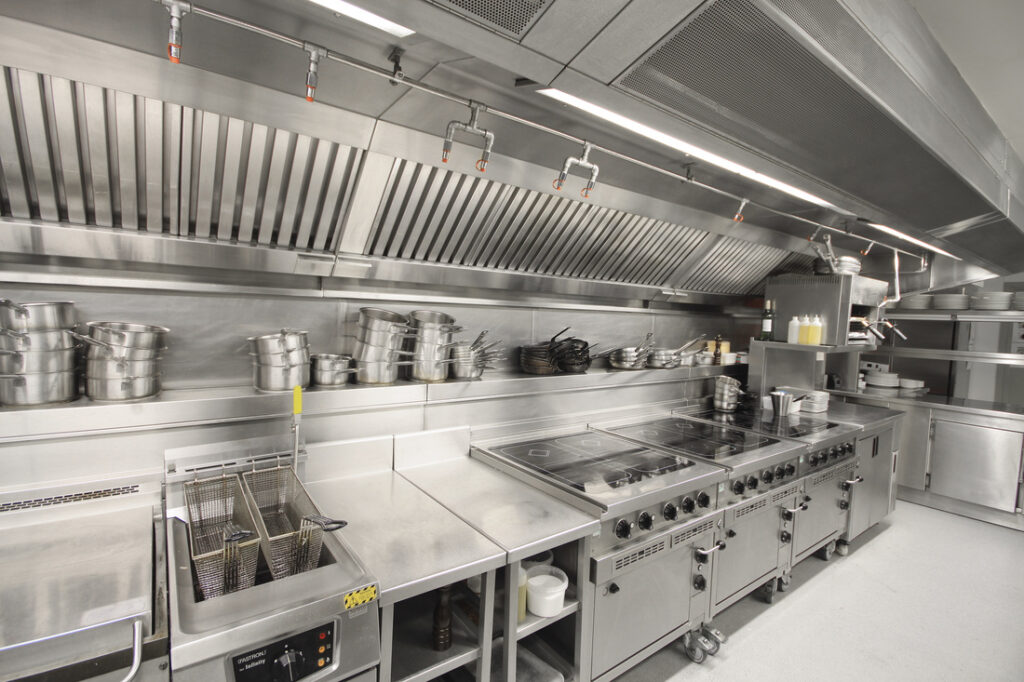
The hood canopy is the enclosure that hangs above the cooking equipment and captures the rising column of heat, smoke, and grease vapor produced during cooking. It’s the most visible part of the exhaust system and the component most people think of when they hear “hood cleaning.”
The canopy is constructed of sheet metal and is sized and positioned to overhang the cooking equipment by specified dimensions that ensure cooking vapors are captured rather than escaping into the kitchen. The interior of the canopy is a grease-accumulating environment from the first moment cooking begins beneath it.
Why It Accumulates Grease
Grease-laden cooking vapors rise from the cooking surface and enter the hood canopy before passing through the baffle filters. As these vapors contact the interior metal surfaces of the canopy, grease particles deposit and accumulate. The rate of accumulation depends on cooking volume, cooking type, and how efficiently the airflow is drawing vapors through the system. In high-volume Atlanta kitchens running charbroilers or wok burners, visible grease accumulation on the interior hood surfaces can develop within days of a professional cleaning.
The exterior face of the canopy also accumulates grease from the cooking environment below, particularly when the system’s capture efficiency has decreased due to filter loading or fan performance issues.
What the Cleaning Involves
Professional cleaning of the hood canopy covers all interior surfaces of the canopy enclosure. The technicians apply commercial alkaline degreasing solution to the interior surfaces, allow appropriate dwell time for the solution to break down the accumulated grease, and pressure wash with hot water to remove both the solution and the loosened deposits.
The target is bare metal throughout. A canopy surface that looks cleaner after cleaning but still has a grease film or residue coating hasn’t met NFPA 96’s bare-metal standard. The exterior face of the hood is also cleaned as part of this process, removing the grease residue that accumulates on the outside surfaces.
Before-and-after photographs of the hood interior are a standard deliverable of professional cleaning and provide visual confirmation that bare metal was achieved.
The Plenum Chamber
What It Is
The plenum is the internal chamber inside the hood canopy, located between the interior face of the canopy and the baffle filter rack. It’s the space where cooking vapors collect after entering the hood and before being drawn through the filters. The plenum isn’t visible from below during normal operations, but it’s one of the heaviest grease accumulation zones in the entire exhaust system.
Why It Accumulates Grease
As cooking vapors enter the hood and spread across the plenum area before being concentrated into the filter sections, the change in airflow velocity causes grease particles to fall out of suspension and deposit on the plenum’s interior surfaces. Because the plenum is enclosed and exposed to the full volume of cooking vapor entering the system, grease accumulates rapidly in this area.
Atlanta fire inspectors who evaluate hood condition look into the plenum during inspections. Significant grease accumulation on plenum surfaces is a direct indicator that the cleaning interval is inadequate for the cooking volume or that previous cleanings weren’t thorough.
What the Cleaning Involves
The plenum is cleaned as part of the hood canopy cleaning process. With the baffle filters removed, the technicians have full access to the plenum interior surfaces. Degreasing solution is applied, dwell time is allowed, and pressure washing removes the deposits. The corners and joints of the plenum, where grease tends to accumulate most heavily due to airflow patterns, receive particular attention.
Baffle Filters
What They Are
Baffle filters are the removable grease separation panels installed in the filter rack inside the hood. They’re positioned directly above the cooking equipment and are the primary grease capture mechanism in the exhaust system. Most commercial kitchen hoods use stainless steel baffle filters, which are durable, cleanable, and designed to last for many years with proper maintenance.
The baffle geometry, the series of alternating baffles that force the airstream to change direction repeatedly, is the mechanism that separates grease particles from the air. As the airstream changes direction through the baffle channels, grease particles, which are heavier than air, can’t follow the sharp turns and deposit on the baffle surfaces instead.
Why They Accumulate Grease
Baffle filters are designed to accumulate grease. That’s their function. Every service period, grease deposits build on the baffle surfaces and in the channels between baffles. As the deposits accumulate, the open area available for airflow through the filter decreases, and the filter’s airflow resistance increases.
This is why regular filter cleaning by kitchen staff is important between professional service visits. Daily or weekly filter cleaning, depending on cooking volume, prevents the accumulation from reaching the point where it significantly restricts airflow. But even with regular in-house cleaning, the professional cleaning removes residual deposits that in-house cleaning can’t fully address.
What the Cleaning Involves
During a professional hood cleaning service, the baffle filters are removed from the filter rack and cleaned separately from the hood interior. The cleaning process typically involves:
- Soaking the filters in a commercial alkaline degreasing solution for sufficient dwell time to penetrate and break down accumulated grease in the baffle channels
- Pressure washing to flush the loosened grease out of the channels
- Visual inspection of each filter for damage, corrosion, or structural deformation
- Reinstallation of cleaned filters in the correct orientation
Filters that have been damaged, significantly corroded, or structurally compromised are flagged for replacement and noted in the service report. The filter rack itself is also cleaned as part of this process, removing the accumulated grease from the frame and support components.
Grease Collection Components
What They Are
The grease collection system captures grease that drains from the baffle filters rather than allowing it to drip onto the cooking equipment below. The primary components are:
- Grease drip troughs. Channels positioned below the filter rack that collect grease draining from the filter surfaces and direct it toward collection cups.
- Grease cups or collection containers. Removable cups positioned at the ends of the drip troughs that hold the collected grease for disposal.
- Drain channels and fittings. The connection points between the drip troughs and the collection cups.
Why They Need Cleaning
Grease collection components do exactly what their name suggests: they collect grease. With every service period, they fill progressively. In high-volume kitchens, the collection cups can reach capacity during a single service. Overflowing grease cups that allow liquid grease to drip onto hot cooking equipment below are both a fire hazard and a direct inspection violation under NFPA 96.
Beyond the overflow risk, grease that sits in collection components between cleanings oxidizes and hardens over time. Old, hardened grease in the collection system creates cleaning challenges and contributes to the overall grease load in the hood area.
What the Cleaning Involves
During a professional cleaning, the grease collection components are emptied of accumulated grease, cleaned to bare metal using degreasing solution and hot water, and inspected for damage or misalignment before being repositioned correctly. Any grease cups that are damaged or that don’t fit properly are noted in the service report.
Grease collected from these components during the cleaning is properly contained for disposal rather than being washed down the drain or left in the kitchen.
The Grease Duct System
What It Is
The grease duct is the enclosed metal pathway that carries cooking exhaust from the hood to the exhaust fan and out of the building. Unlike a standard HVAC duct, a grease duct is specifically constructed for the purpose of carrying grease-laden cooking vapors and must meet specific construction requirements under both NFPA 96 and the International Mechanical Code.
Grease ducts must be constructed of steel at specified minimum gauges, have all joints continuously welded to prevent grease leakage, maintain specified clearances from combustible building materials, and have access panels installed at required intervals to allow the interior to be inspected and cleaned.
In Atlanta’s commercial building stock, duct configurations vary widely. Purpose-built restaurant facilities may have short, direct duct runs to rooftop fans. Converted industrial spaces and historic storefronts throughout neighborhoods like West Midtown, Inman Park, and the Old Fourth Ward sometimes have longer, more complex duct runs with multiple directional changes. The duct configuration directly affects both the cleaning complexity and the grease accumulation pattern.
Why It Accumulates Grease
Cooking vapors that pass through the baffle filters continue into the duct system as a grease-laden airstream. As this airstream travels through the duct, grease particles deposit on the interior duct walls. The deposition isn’t uniform. Grease accumulates fastest at:
- Directional changes. Where the duct changes direction, grease particles continue in their original direction momentarily while the airstream turns, depositing heavily on the outer wall of the turn.
- Horizontal runs. On horizontal duct sections, gravity causes particles to settle on the bottom surface.
- Areas of airflow turbulence. Fittings, transitions, and access panel frames create turbulence that increases particle deposition rates.
- Cooler sections. As cooking vapors cool during transit through the duct, grease condenses onto duct walls at higher rates in cooler sections.
Over time, these deposits harden and darken as the grease oxidizes and polymerizes through repeated heating cycles. Older, hardened deposits are more difficult to remove than fresh accumulation and present a more serious fire hazard because oxidized and polymerized grease has a lower ignition threshold than fresh grease.
The duct system is the component where the most serious fire risk accumulates in most Atlanta commercial kitchens, and it’s the component most commonly skipped in incomplete cleaning services.
What the Cleaning Involves
Cleaning the duct interior requires physical access through the access panels installed along the duct run. Technicians work through each accessible panel, applying commercial degreasing solution to the interior duct walls, allowing appropriate dwell time, and flushing with hot water to remove the loosened deposits.
In systems with significant or hardened accumulation, mechanical scraping may be required at specific locations before or after chemical treatment. Long or complex duct runs require systematic work through multiple access points to address the full interior pathway.
The extent of duct cleaning is determined by accessibility. Any sections of the duct that can’t be accessed due to missing or improperly located access panels represent a limitation that should be documented in the service report. Inaccessible duct sections are a code compliance issue that requires structural correction, not just a cleaning limitation.
Photographs of the duct interior viewed through access panels, before and after cleaning, are an important documentation component. These photographs provide evidence that the interior was actually cleaned rather than simply described as having been cleaned.
The Exhaust Fan
What It Is
The exhaust fan is the mechanical driver of the entire exhaust system, typically mounted on the rooftop above the duct outlet. It creates the pressure differential that pulls air from the cooking surface through the hood, filters, and duct system, and discharges it outside the building. Every other component of the exhaust system depends on the fan creating sufficient airflow to function as designed.
Commercial kitchen exhaust fans are most commonly upblast fans, where air is drawn up through the duct and discharged horizontally or upward from the rooftop. Direct-drive and belt-drive configurations both exist, with different mechanical maintenance considerations but the same cleaning requirements.
The exhaust fan is the component of the exhaust system that’s furthest from the kitchen floor and most completely out of view during normal operations. It’s also the component whose maintenance is most commonly neglected by cleaning companies that limit their scope to the hood and duct components below.
Why It Accumulates Grease
Grease-laden air that travels through the full length of the duct system reaches the exhaust fan before being discharged to the atmosphere. Some of the grease in this airstream deposits on the fan impeller blades, on the interior surfaces of the fan housing, and on the motor enclosure before the air exits the system.
The grease accumulation on exhaust fan impeller blades creates a compounding mechanical problem. Unlike flat surfaces where grease deposits build uniformly, fan blades accumulate grease unevenly based on their rotation, position, and the airflow patterns within the fan housing. Uneven accumulation creates rotating imbalance, which generates vibration. Vibration accelerates bearing wear. As bearing wear progresses, vibration worsens, the fan runs louder, and the bearing failure timeline shortens.
Beyond the mechanical consequences, grease on the exhaust fan creates a fire hazard at the discharge point. Grease depositing on a motor that generates heat during operation creates ignition risk. Grease escaping the discharge point accumulates on the rooftop surface below.
What the Cleaning Involves
Cleaning the exhaust fan requires the technicians to go to the rooftop. There is no way to properly clean the exhaust fan impeller without physically accessing the fan assembly from above.
For upblast fans with tipping mechanisms, the fan housing is tipped or lifted to expose the impeller for cleaning. For other configurations, the housing panels are removed. The cleaning then covers:
- Impeller blades. Degreasing solution applied to all blade surfaces, allowed appropriate dwell time, then pressure washed and rinsed to bare metal.
- Fan housing interior. All interior surfaces of the fan housing cleaned of grease deposits.
- Motor enclosure. External surfaces of the motor enclosure cleaned of grease accumulation.
- Fan base and curb mount. The base of the fan unit and the rooftop curb that supports it are cleaned of grease deposits.
After cleaning, the fan is reassembled and inspected for any visible mechanical issues, including loose fasteners, belt condition on belt-drive units, or visible wear on accessible components.
Before-and-after photographs of the fan assembly, taken from the rooftop, are a standard deliverable of professional cleaning and provide the photographic record that confirms the fan was actually cleaned.
The Rooftop Discharge Area
What It Is
The rooftop discharge area is the section of the rooftop around and adjacent to the exhaust fan discharge point. As the exhaust fan discharges cooking exhaust to the atmosphere, grease particles in the airstream don’t all make it fully into the air. Some fall back onto the rooftop surface around the fan discharge, and over time these deposits accumulate into a spreading pool of grease on the rooftop membrane.
Why It Needs Cleaning
Rooftop grease accumulation creates several problems that make it a cleaning requirement rather than a cosmetic concern:
Fire risk. A grease-saturated rooftop surface is a combustible fuel load exposed to potential ignition sources including sparks from the exhaust discharge, nearby HVAC equipment, lightning during Atlanta’s active thunderstorm season, and in some cases external sources during the city’s summer outdoor event calendar.
Roofing membrane damage. Commercial roofing membranes are not designed for prolonged grease exposure. Grease penetrates and degrades membrane materials, breaking down the adhesives and sealants in the roofing system and creating areas of membrane failure that allow water intrusion.
Slip hazards. Grease-coated rooftop surfaces are genuinely dangerous for the HVAC technicians, roofers, and other tradespeople who access the rooftop for legitimate purposes.
Code compliance. Current editions of NFPA 96 address grease containment at the exhaust fan discharge point and the requirement to prevent grease from accumulating freely on the rooftop surface. Atlanta fire inspectors are increasingly attentive to rooftop grease conditions, particularly for high-volume operations.
What the Cleaning Involves
Rooftop cleaning as part of a professional hood cleaning service addresses the grease accumulation on the rooftop surface around the fan discharge. The technicians apply degreasing solution to the affected rooftop area, allow dwell time, and remove the loosened grease using appropriate methods for the rooftop membrane type.
The extent of rooftop cleaning required depends on how much grease has accumulated since the last service and whether it has spread beyond the immediate area around the fan discharge. A system that’s been maintained on a regular professional cleaning schedule typically has manageable rooftop accumulation. A system that’s been receiving incomplete service, or that hasn’t had the fan component cleaned regularly, may have significant spread that requires more extensive remediation.
The Fire Suppression System: Adjacent but Separate
Its Relationship to Hood Cleaning
The automatic fire suppression system installed in the hood assembly is not cleaned as part of the hood cleaning service, but it interacts with the exhaust system closely enough to be worth addressing here. The suppression system is inspected and serviced separately, typically by a licensed fire suppression service provider, on a semi-annual schedule under NFPA 17A and manufacturer requirements.
The connection to hood cleaning is practical: the cleaning service involves working inside the hood and around the suppression system components. A professional cleaning crew should avoid damaging suppression nozzles or piping during the cleaning and should note any visible suppression system issues they observe, including missing nozzles, damaged piping, or coverage concerns, in the service report.
When cooking equipment has been moved or added since the last suppression system inspection, the nozzle coverage should be evaluated by the suppression system service provider. Hood cleaning and suppression system service are often scheduled in coordination to minimize the number of off-hours service windows required.
Documentation: A Required Component of Every Service
Documentation isn’t a supplementary deliverable that professional cleaning companies offer as a courtesy. It’s a required component of NFPA 96-compliant service, and Atlanta fire inspectors treat the absence of documentation as a compliance failure independent of the physical condition of the exhaust system.
A complete professional hood cleaning service produces the following documentation:
The Service Sticker
Immediately after the cleaning is complete, a service sticker is affixed to the hood in a visible, accessible location. The sticker must include at minimum the date of service and the name of the cleaning company. The sticker is the first-pass compliance indicator that an Atlanta fire inspector checks when evaluating a kitchen’s exhaust system. Its presence, currency, and visibility are immediately apparent.
The sticker should be placed on a part of the hood where it’s visible without moving equipment or looking behind anything. Common placements include the hood face near the filter rack or on the side of the hood canopy adjacent to the access panel.
The Service Report
The service report is the written documentation of what was cleaned, in what condition the system was found before the cleaning, and what condition it was in after. A compliant service report includes:
- The name and address of the facility serviced
- The date of the service
- The name of the cleaning company and the technician or crew performing the work
- A specific description of all components cleaned, covering the hood canopy, plenum, baffle filters, grease collection components, duct interior with notation of the access points used, exhaust fan assembly, and rooftop discharge area
- The condition of the system before cleaning, including notation of heavy accumulation areas, inaccessible sections, and any maintenance observations
- The condition of the system after cleaning, confirming that the work met NFPA 96’s bare-metal standard
- Any recommendations for follow-up action, such as filter replacement, structural correction for inaccessible duct sections, or mechanical assessment for the exhaust fan
A service report that says only “hood cleaning completed” on a given date without describing the scope of work is not adequate documentation of a compliant service. If you receive a report at this level of vagueness, ask specifically for a more detailed description.
Before-and-After Photographs
Before-and-after photographs have become the professional standard in the hood cleaning industry and are increasingly expected by Atlanta fire inspectors as part of a credible compliance record. Time-stamped photographs should cover:
- The hood canopy interior and plenum before and after cleaning
- The baffle filter surfaces before and after cleaning
- The duct interior viewed through access panels before and after cleaning, from multiple access points on longer duct runs
- The exhaust fan impeller and housing before and after cleaning
- The rooftop area around the fan discharge before and after cleaning
These photographs serve multiple purposes. They provide visual confirmation that the cleaning covered the components described in the service report. They document the system’s condition at each service interval, which helps identify areas that are accumulating grease faster than expected. And they provide evidence in an insurance or legal context that the system was being maintained properly.
Any professional cleaning company serving Atlanta commercial kitchens in 2026 should be providing time-stamped photographic documentation as a standard deliverable of every service. A company that doesn’t provide photographs is leaving you with documentation that can’t fully support your compliance position during an inspection.
What’s Not Included in a Standard Hood Cleaning Service
Understanding what’s not included in a standard hood cleaning service is as useful as understanding what is. Several related services exist alongside hood cleaning that address different aspects of commercial kitchen maintenance.
Fire Suppression System Service
As noted above, the automatic fire suppression system is inspected and serviced separately from the hood cleaning. If you’re scheduling a hood cleaning and haven’t had your suppression system serviced recently, coordinate both services to ensure your complete exhaust and fire protection system is current.
Grease Trap Cleaning
Grease traps, the underground or under-sink collection systems that capture grease from dishwashing and sink drainage before it enters the municipal sewer system, are a separate service from hood cleaning. Grease trap cleaning is performed on its own schedule, typically more frequently than hood cleaning for high-volume kitchens, and involves different equipment and disposal processes.
General Kitchen Deep Cleaning
Professional hood cleaning addresses the exhaust system components specifically. General kitchen deep cleaning, including equipment surfaces, floors, walls, and the hard-to-reach areas of the kitchen that aren’t addressed during daily cleaning, is a separate service. Some companies offer both, and coordinating them can be practical for scheduling purposes, but they’re distinct services with different scopes.
Cooking Equipment Service
The cooking equipment under the hood is not serviced as part of a standard hood cleaning. Cooking equipment maintenance, including burner service, thermostat calibration, and mechanical inspection, is performed by cooking equipment service technicians rather than by hood cleaning crews.
Rooftop Grease Containment Installation
If a rooftop grease containment system, the device that collects grease at the exhaust fan discharge point, isn’t already in place, installing one is a separate project from routine cleaning. The installation typically requires a qualified contractor and may involve permitting depending on the scope of the work.
How to Verify That Your Cleaning Covers Everything
With a clear understanding of what a complete service includes, verifying that any specific cleaning provider is covering all required components is straightforward. Here’s a practical checklist for evaluating any hood cleaning service:
Before the service:
- Confirm with the company that their service includes the duct interior, the exhaust fan, and the rooftop
- Confirm that before-and-after photographs will be provided
- Ask how long the service is expected to take for your system
During the service:
- Observe whether the crew goes to the rooftop as part of the service
- Note the total service duration and whether it’s consistent with a complete cleaning
- Check that protective sheeting is applied before cleaning begins
After the service:
- Confirm that a service sticker has been applied to the hood in a visible location
- Review the service report for specific description of all components cleaned, including the duct interior and the exhaust fan
- Review the before-and-after photographs and confirm they include the duct interior through access panels, the exhaust fan, and the rooftop area
If any of these checks reveals a gap, address it directly with the cleaning company. A company that performed a complete service should be able to provide documentation confirming every component.
How Cleaning Scope Connects to Inspection Outcomes
The connection between cleaning scope and Atlanta fire inspection outcomes is direct and well-documented in the patterns of violations that Atlanta Fire Rescue Department and Fulton County Fire and Emergency Services cite across commercial kitchen inspections.
Kitchens receiving complete-system professional cleaning at the correct NFPA 96-required frequency for their cooking type consistently have fewer exhaust system violations than those receiving incomplete cleaning. The reason is straightforward: a complete cleaning addresses the grease accumulation in every component that an inspector evaluates. An incomplete cleaning may address the components visible during casual observation while leaving the components that inspectors look at most carefully, the duct interior and the exhaust fan, unaddressed.
An Atlanta fire inspector who looks through an access panel at a duct interior coated with months of accumulated grease will issue a violation regardless of how clean the hood canopy looks below. The duct interior condition tells the inspector that the service sticker on the hood doesn’t reflect a complete cleaning. The documentation that appears to show compliance doesn’t withstand the physical evidence of what’s in the duct.
The only reliable path to passing exhaust system inspections in Atlanta is complete-system cleaning that addresses every component in the exhaust pathway, documented with a service report and photographs that confirm the scope of the work performed.
Frequently Asked Questions About What’s Included in Hood Cleaning
Is the exhaust fan always included in a standard hood cleaning service?
It should be, but it isn’t always in practice. The exhaust fan is a required component of a complete NFPA 96-compliant cleaning, which means cleaning the fan is part of what compliance requires. However, some cleaning companies limit their standard service scope to the hood and duct components accessible from inside the kitchen, skipping the rooftop fan because it requires additional time and effort. Before engaging any company, ask directly whether their service includes going to the rooftop to clean the exhaust fan at every visit. If the answer isn’t a clear yes, the service isn’t complete.
What does “cleaned to bare metal” actually mean?
NFPA 96’s bare-metal standard means that all grease deposits are removed from the surface, leaving clean metal visible. It doesn’t mean the metal is polished or restored to its original appearance. It means the grease film, coating, or deposit is gone, and the underlying metal surface is accessible and clean. A surface that appears cleaner after cleaning but still has a residual grease coating or film hasn’t met the bare-metal standard.
Do the baffle filters get replaced during a cleaning, or just cleaned?
Baffle filters are cleaned rather than replaced as a routine part of the service. Professional cleaning removes accumulated grease from the filter channels, restoring the open area available for airflow. Replacement becomes appropriate when a filter has been damaged, significantly corroded, or structurally compromised in a way that cleaning can’t address. A professional cleaning company should inspect filters after cleaning and flag any that warrant replacement, noting this in the service report.
What happens if sections of my duct can’t be accessed during the cleaning?
Inaccessible duct sections represent a compliance issue that the cleaning crew can’t resolve through cleaning alone. The technicians should document any inaccessible sections in the service report, noting the location and the reason for the access limitation. Resolving inaccessible duct sections requires structural correction, typically adding properly located access panels at the required intervals. This is a project that needs to be addressed separately from the cleaning service itself, and it should be prioritized because inaccessible duct sections can’t be maintained in compliance with NFPA 96.
How are the chemicals used in hood cleaning disposed of?
The grease-laden water and cleaning chemicals produced by a professional hood cleaning service are collected by the cleaning crew and disposed of through appropriate waste management channels. Grease from a hood cleaning cannot be washed down a kitchen drain or disposed of in a dumpster. A professional company brings appropriate collection containers and removes collected waste from the property as part of the service. If a cleaning company leaves grease disposal to the restaurant operator or disposes of it inappropriately, that’s a sign of unprofessional practice.
Should the cleaning crew notify me before going to the rooftop?
Yes. A professional cleaning crew should communicate with the management contact who’s present throughout the service, including before they go to the rooftop. This allows you to confirm that rooftop access has been arranged, to note any rooftop conditions worth pointing out to the crew before they start work up there, and to be aware of when the rooftop component of the service is beginning so you can factor it into your timeline.
What if I only want the visible hood surfaces cleaned? Is that an option?
Some companies offer hood-and-filter cleaning as a distinct service from complete-system cleaning. This type of service has a legitimate place as a supplemental cleaning between full professional services for kitchens with very high grease production rates. However, hood-and-filter cleaning doesn’t satisfy the NFPA 96 requirement for professional cleaning and doesn’t produce the compliance documentation that Atlanta fire inspectors look for. If you’re scheduling cleaning as your NFPA 96-required service, it needs to cover the complete system.
How do I know if the duct cleaning actually reached all accessible sections?
The before-and-after photographs that a professional cleaning company provides should include images of the duct interior accessed through multiple access panels, not just the panel nearest the hood. If your service report includes photographs from only one access point on a longer duct run, ask whether additional access points were cleaned and why photographs from those points weren’t included. A company that provides comprehensive photographic documentation across multiple access points is demonstrating the scope of their duct cleaning in a way that a company providing only hood photographs cannot.
Complete Cleaning Is the Only Cleaning That Counts
Every component described in this article, from the hood canopy and plenum through the baffle filters, the grease collection system, the duct interior, the exhaust fan, and the rooftop discharge area, accumulates grease during every cooking service. Every one of those components needs to be cleaned to bare metal at the appropriate NFPA 96-required frequency to satisfy the standard that Atlanta fire inspectors enforce and to keep the exhaust system below the grease accumulation thresholds that create fire risk.
A cleaning that covers some of these components but skips others isn’t a partial solution. It’s a non-compliant cleaning that leaves the fire risk and the inspection exposure intact while creating the appearance of having addressed them. Understanding what should be included in a complete service, and verifying that every cleaning you schedule actually covers those components, is the most direct way to ensure that your hood cleaning investment is actually doing what you need it to do.
Premier Grease has been delivering complete-system hood cleaning to Atlanta commercial kitchens since 2001. Every service we perform covers every component described in this article, cleaned to bare-metal standard throughout the exhaust pathway from hood to rooftop. Our service documentation includes time-stamped before-and-after photographs of every major system component, a detailed service report confirming the complete scope of the cleaning, and a properly completed service sticker applied to the hood.
No contracts required. Licensed, bonded, and insured with $5 million in general liability coverage. We serve every type of commercial cooking operation across Atlanta, Fulton County, DeKalb County, Gwinnett County, Cobb County, and surrounding areas within our 100-mile service radius, scheduling around your operating hours so cleaning happens when your kitchen is down.
Call us 24/7 at 1-800-880-1142 or visit Premier Grease to schedule your next professional hood cleaning and get the complete service that compliance actually requires.