
Article Summary
- Fulton County restaurants face fire code inspections from multiple authorities — the Atlanta Fire Rescue Department within city limits and county fire marshal offices in unincorporated areas — and the violations they cite follow consistent, predictable patterns.
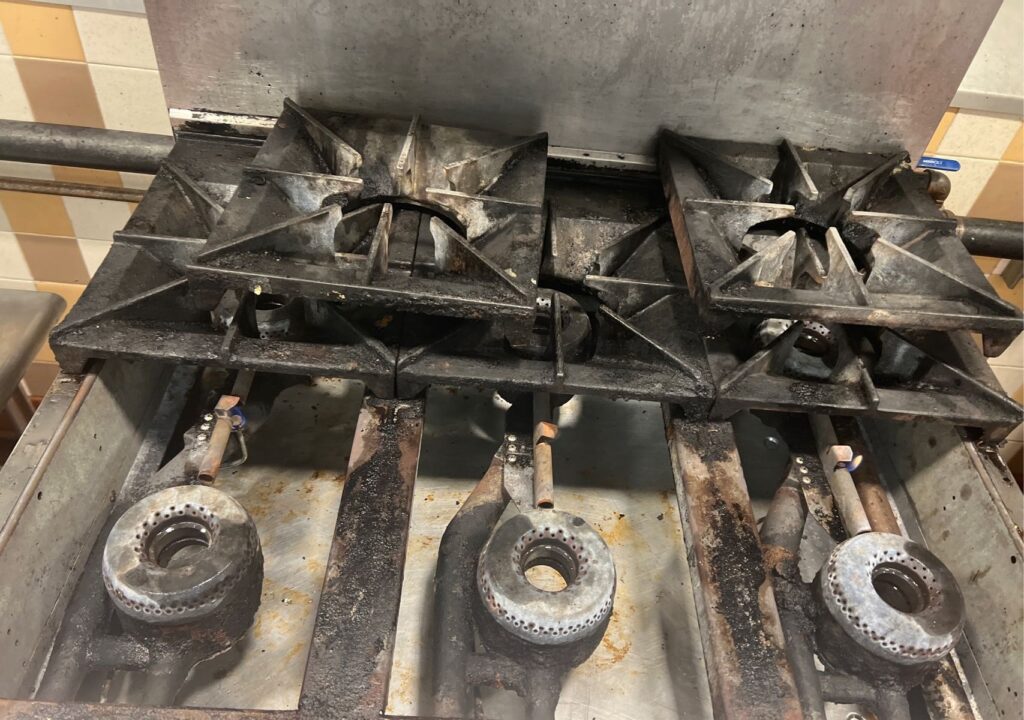
- Grease buildup in the exhaust system remains the most frequently cited violation category across Fulton County commercial kitchens, and it’s the one with the most direct, preventable path to correction.
- Many of the most common violations aren’t caused by negligence — they result from operators not knowing exactly what the code requires, using cleaning companies that don’t meet the NFPA 96 standard, or letting routine maintenance slip during busy operational periods.
- Each violation in this article includes a plain-language explanation of what the code requires, why the violation occurs, and the specific steps that correct it — so operators can take action rather than just understand the problem.
- Several of the violations cited most often in Fulton County restaurants carry compounding consequences — a single failed inspection triggers re-inspection fees, compliance deadlines, and elevated scrutiny in all future visits.
- Professional hood cleaning is the single most effective corrective and preventive action for the majority of exhaust-system-related violations, and it’s the foundation of a defensible compliance record.
- Maintaining these professional service records is vital because failing to provide proof of certified cleaning is a primary reason why the City of Atlanta requires documented NFPA 96 compliance for all kitchens to ensure fire safety standards are met.
Why Fulton County Violations Follow a Pattern
Walk through enough commercial kitchen inspections across Fulton County — in the dense restaurant corridors of Buckhead, the mixed-use developments along the Beltline, the older storefronts in College Park and East Point, the institutional kitchens at Atlanta’s hospitals and universities — and a pattern emerges. The same violations come up again and again, across different types of kitchens, different ownership structures, and different cuisine styles.
That pattern exists for a reason. Most fire code violations in commercial kitchens aren’t random. They cluster around a predictable set of maintenance failures, operational habits, and knowledge gaps that are common across the industry. Understanding the pattern is useful because it means you can address the highest-risk areas before an inspector identifies them for you.
This article works through the most commonly cited fire code violations in Fulton County restaurants in detail — what the code actually requires, why operators end up in violation, and exactly what needs to happen to correct it. The focus is practical: not just identifying problems but giving operators a clear path to fixing them.
One note on jurisdiction before getting into the violations: Fulton County contains both areas within the City of Atlanta — where the Atlanta Fire Rescue Department is the primary enforcement authority — and unincorporated areas of the county, where the Fulton County Fire and Emergency Services handles commercial fire code enforcement. Both agencies enforce Georgia’s state minimum standard codes, including NFPA 96, and the violations they cite are substantively the same. Where there are meaningful differences in how the two jurisdictions handle specific issues, this article notes them.
Violation #1: Overdue or Missed Hood Cleaning
How often it’s cited: Consistently the most frequent fire code violation in Fulton County commercial kitchen inspections.
What the code requires: NFPA 96 requires that commercial kitchen exhaust systems be professionally cleaned at minimum intervals determined by cooking type and volume. High-volume operations using charbroilers, woks, or solid-fuel equipment require monthly cleaning. Moderate-volume kitchens using fryers and standard commercial ranges require quarterly cleaning. Lower-volume operations may qualify for semi-annual or annual cleaning, but that determination must be based on an actual assessment of cooking activity — not an assumption.
Why it happens: Overdue cleanings happen in predictable ways. A busy service period causes a scheduled cleaning to get pushed back a week, then another week, and then it doesn’t happen at all. A kitchen changes ownership and the new operator doesn’t immediately establish a cleaning schedule. A restaurant manager assumes that because the previous cleaning “just happened” a few months ago, there’s no urgency — without realizing that their cooking volume requires monthly rather than quarterly service. A low-cost cleaning company is hired and performs surface-level work that doesn’t qualify as a compliant cleaning, so the actual grease accumulation continues building even though the calendar says a cleaning happened.
Why it matters: Grease accumulation inside a commercial exhaust system is the primary fuel source for duct fires. A duct fire in a grease-laden system can travel from the hood to the rooftop in seconds, generating temperatures that exceed 2,000 degrees Fahrenheit inside the duct. The fire suppression system installed in the hood is designed to protect the cooking surface — it is not designed to extinguish a duct fire that has already propagated beyond the hood. Once a duct fire gets going, the options narrow quickly and dangerously.
How to fix it:
The correction for an overdue cleaning is straightforward: schedule a professional hood cleaning immediately with a company that performs NFPA 96-compliant service — meaning the entire exhaust system from hood canopy to rooftop fan, cleaned to bare metal. Not a surface wipe-down. Not filters only. The complete system.
After the cleaning, establish a forward-looking maintenance calendar based on your actual NFPA 96-required frequency. If you’re not certain which frequency applies to your kitchen, ask the cleaning company to assess your cooking operation. A quarterly cleaning schedule is not automatically appropriate for every kitchen that uses it — a restaurant with a charbroiler running six nights a week is a monthly kitchen, not a quarterly one, regardless of what the previous operator scheduled.
Document the cleaning properly: service sticker on the hood, service report with before-and-after photographs, and filing the report in an accessible location. Then keep the schedule.
Violation #2: Incomplete Cleaning — Surface Work That Doesn’t Reach the Duct Interior
How often it’s cited: Cited frequently, often discovered during re-inspections after an operator believed the cleaning issue had been resolved.
What the code requires: NFPA 96 is explicit that cleaning must encompass the entire exhaust system — hood canopy, plenum, baffle filters, grease collection devices, duct interior from the hood collar to the exhaust fan discharge, the exhaust fan assembly, and the rooftop components around the fan. The standard for cleanliness is bare metal — all grease deposits removed, not reduced or cosmetically improved. A cleaning that reaches bare metal on the visible hood surfaces but leaves accumulated grease inside the duct interior does not satisfy NFPA 96.
Why it happens: Price competition in the hood cleaning market creates a persistent problem in Fulton County: companies that win business on low price by performing incomplete cleanings. A crew that shows up, cleans the visible surfaces of the hood and the exterior of the filters, applies a service sticker, and leaves in 45 minutes has performed a cleaning that looks legitimate on the surface — the sticker says it happened, the hood exterior looks cleaner — but hasn’t touched the duct interior or the exhaust fan. The operator gets a sticker and assumes compliance. The duct system continues accumulating grease undetected.
This also happens when cleaning is delegated to kitchen staff as part of regular maintenance duties. Staff-performed hood cleaning is a reasonable supplement to professional service, but it doesn’t reach the duct interior, doesn’t involve the equipment or products necessary to clean to bare metal, and doesn’t satisfy the professional service requirement of NFPA 96. A kitchen where staff are cleaning the hood and no professional service is being scheduled has a documentation problem and a physical compliance problem simultaneously.
Why it matters: An inspector who looks through an access panel and sees significant grease accumulation on interior duct walls will issue a violation regardless of what the service sticker on the hood says. Incomplete cleaning creates a false sense of compliance while leaving the actual fire hazard unaddressed. It also means that when a physical inspection catches the discrepancy, the operator faces both a violation and a damaged relationship with the inspector — because the documentation suggested compliance that the physical evidence contradicts.
How to fix it:
The first step is confirming what your current cleaning company actually cleans. Ask directly: does the service include the duct interior, the exhaust fan, and the rooftop components? Ask to see a sample service report showing the scope of work. Ask how long a typical service takes for a kitchen your size — a comprehensive cleaning of a full system takes hours, not minutes.
If the answer raises questions about whether you’ve been receiving compliant service, schedule a full professional cleaning with a company whose scope of work clearly encompasses the entire exhaust pathway. After the cleaning, review the service report to confirm it documents all components — not just the hood.
Going forward, require before-and-after photographs with every service. Photographs of the duct interior accessed through panels, the exhaust fan before and after cleaning, and the rooftop components are the clearest possible evidence that the work went beyond the hood’s visible surfaces.
Violation #3: Missing or Inadequate Service Documentation
How often it’s cited: Among the top three most cited violations in Fulton County commercial kitchen inspections, and the one that most frequently surprises operators who believed their kitchen was in compliance.
What the code requires: NFPA 96 requires that cleaning records be maintained and available for inspection. This means a service sticker affixed to the hood showing the date of service and the name of the cleaning company, a written service report documenting the scope and results of the cleaning, and a service history available for review. The documentation must be accessible during an inspection — not at a corporate office in another city, not in an email inbox that requires 20 minutes to search, and not described verbally without supporting paperwork.
Why it happens: Documentation failures fall into several categories. The cleaning company doesn’t provide documentation as standard practice — this is more common than it should be, particularly among lower-cost service providers. The documentation is provided but not retained — the service report gets filed in a pile and discarded during a cleaning, or an employee throws it away without understanding its compliance significance. The service sticker is applied to the inside of a cabinet door or a back wall where it isn’t visible on quick inspection. The operator has moved locations, changed ownership, or changed cleaning companies and the historical records didn’t transfer. Or the kitchen has been using informal cleaning arrangements — kitchen staff, a handyman, a contact who “does hood cleaning on the side” — that don’t produce compliant documentation.
Why it matters: As discussed in detail in the broader NFPA 96 compliance context, documentation is not a technicality on top of the real compliance requirement. It is the compliance requirement. An inspector who cannot verify that your exhaust system has been maintained in compliance with NFPA 96 — because no documentation exists — treats the kitchen as non-compliant regardless of its physical condition. Missing documentation is a citable violation in its own right, separate from any physical condition issues.
How to fix it:
If documentation is missing, the correction process starts with establishing a complete baseline. Schedule a professional hood cleaning with a company that provides full documentation as standard practice — service report with scope description, condition notes, and before-and-after photographs, plus a properly completed sticker applied to the hood in a visible location.
Contact previous cleaning companies for copies of historical service records if you need to rebuild a compliance history. Most professional companies retain their service records and can provide copies quickly.
Going forward, create a physical compliance folder — a simple binder at the restaurant — where every service report is filed immediately upon receipt. Train whoever manages vendor relationships to retain all hood cleaning documentation, and specify in any service agreement that documentation is a required deliverable of every visit.
Violation #4: Suppression System Nozzle Misalignment or Obstruction
How often it’s cited: Cited regularly in Fulton County inspections, particularly in kitchens where cooking equipment has been moved, replaced, or supplemented since the original suppression system installation.
What the code requires: NFPA 96 and NFPA 17A (the Standard for Dry Chemical Extinguishing Systems) together require that automatic fire suppression systems in commercial kitchen hoods provide complete coverage of all cooking surfaces and equipment that present a grease fire risk. Suppression nozzles must be positioned, oriented, and unobstructed so that agent discharge reaches every protected cooking appliance. The system must also be connected to an automatic gas shut-off that activates when the suppression system discharges.
Why it happens: Suppression nozzle violations are almost always the result of equipment changes that occurred after the suppression system was designed and installed. A restaurant adds a second fryer to handle increased volume. A new charbroiler replaces an older griddle, shifting the heat source location. Prep equipment gets repositioned during a kitchen reorganization. The hood equipment stays in place — the suppression nozzles stay where they were originally installed — but the cooking equipment underneath no longer aligns with the coverage zones the system was designed to protect.
It also happens when kitchen staff inadvertently reposition or obstruct nozzles during cleaning. A nozzle that gets bumped or bent during a filter change, or one that ends up with a pan hanging in front of it, can lose its designed coverage area without anyone noticing.
Why it matters: A suppression system that can’t reach a cooking surface during a fire provides no protection for that surface. An automatic suppression system with coverage gaps is one of the most dangerous false securities in a commercial kitchen — operators believe they have fire suppression, but the suppression they have doesn’t cover the equipment that actually ignites. Fulton County inspectors who identify nozzle coverage issues treat them as serious because the consequence of a coverage gap is a fire that spreads unchecked.
How to fix it:
Nozzle coverage assessment is part of a semi-annual suppression system inspection performed by a licensed fire suppression service provider. If you’ve made any equipment changes since your last suppression system service — added appliances, moved equipment, changed the hood layout — schedule a suppression system evaluation before your next fire inspection rather than after.
During the evaluation, the technician assesses whether current nozzle positions cover all protected cooking surfaces according to the system’s design specifications. Corrections typically involve adding nozzles, repositioning existing ones, or in some cases redesigning the coverage layout to reflect a substantially changed equipment configuration.
Make it a standard operating procedure to notify your suppression system service provider any time cooking equipment is added or repositioned, not just at the scheduled semi-annual service.
Violation #5: Blocked or Inaccessible Electrical Panels
How often it’s cited: One of the most consistently cited non-exhaust violations across all types of Fulton County commercial occupancies, including restaurants.
What the code requires: The National Electrical Code, adopted as a Georgia state minimum standard, requires a minimum 36-inch clear working space in front of electrical panels and disconnect switches. This space must be maintained at all times — not just during electrical work. The requirement exists so that electrical panels can be accessed and de-energized quickly during an emergency.
Why it happens: Commercial kitchens are space-constrained environments, and electrical panels are often located in inconvenient spots — in a corner near the walk-in cooler, behind a prep table, in a utility corridor that doubles as storage. The 36-inch clearance that existed when the kitchen was set up gradually gets encroached upon as rolling racks migrate, equipment gets added, and storage creep fills every available corner. Nobody makes a decision to block the electrical panel — it just ends up that way incrementally.
Why it matters: In an electrical emergency — a burning smell, a tripped breaker that won’t reset, smoke from an electrical component — the ability to reach and de-energize a panel immediately can mean the difference between a contained incident and a building fire. A panel that requires moving three shelving units and a reach-in cooler to access is functionally inaccessible in an emergency. Inspectors treat panel blockages as serious because they directly compromise emergency response capability.
How to fix it:
Walk your kitchen and physically measure the space in front of every electrical panel and disconnect switch. Any obstruction within the 36-inch zone needs to be permanently relocated — not moved temporarily for the inspection and then pushed back.
For kitchens where the panel location genuinely creates a layout conflict, the solution is redesigning the surrounding area so that the required clearance is maintained within the normal flow of kitchen operations. Rolling racks that live in a corridor should be stored in positions that don’t encroach on panel clearances. Permanent equipment should not be installed within the clearance zone.
Mark the clearance zone on the floor if necessary — a simple painted or taped line indicating “keep clear” is a practical reminder that’s been known to prevent recurring violations in busy kitchens.
Violation #6: Portable Fire Extinguisher Deficiencies
How often it’s cited: Cited regularly in Fulton County restaurant inspections across all kitchen types and sizes.
What the code requires: Commercial kitchens in Fulton County must be equipped with Class K portable fire extinguishers — specifically designed for fires involving cooking oils and fats — within 30 feet of the cooking equipment they protect, measured along the path of travel. Extinguishers must be annually inspected by a qualified fire equipment company, and the inspection tag must be current. Extinguishers must be mounted in accessible, visible locations and maintained at proper operating pressure.
Why it happens: Extinguisher violations occur for a variety of reasons: the annual inspection gets overlooked during busy operational periods; an extinguisher is discharged or damaged and not replaced; extinguishers are stored behind equipment or in closets where they’re technically present but practically inaccessible in an emergency; a kitchen uses ABC-rated extinguishers in the cooking area rather than the Class K rating specifically required for cooking oil fires; or a kitchen expansion moved cooking equipment farther than 30 feet from the nearest extinguisher without anyone adding an additional unit.
Why it matters: A Class K extinguisher deploys a wet chemical agent specifically formulated to suppress and cool cooking oil fires. A standard ABC dry chemical extinguisher is not an appropriate substitute in a commercial kitchen cooking area — it won’t effectively suppress a high-temperature cooking oil fire and can create a hazardous mess that makes the situation worse. Having the right extinguisher in the right place, in service condition and properly inspected, is a basic life-safety requirement that directly protects the people working in the kitchen.
How to fix it:
Conduct an extinguisher audit: locate every extinguisher in your kitchen and adjacent areas, check the inspection tag date, verify the pressure gauge is in the green zone, confirm the extinguisher is mounted visibly and accessibly, and verify the Class K rating for the units in the cooking area.
If any extinguisher is overdue for annual inspection, contact your fire equipment service provider immediately. If any unit in the cooking area is ABC-rated rather than Class K-rated, it needs to be replaced with the correct type. If your kitchen layout has changed since the extinguishers were originally placed, verify that the 30-foot travel distance requirement is still met from every cooking position.
Violation #7: Extension Cords Used as Permanent Wiring
How often it’s cited: One of the most ubiquitous violations in Fulton County restaurant inspections, found across every kitchen type from food trucks to hotel banquet facilities.
What the code requires: The National Electrical Code prohibits the use of flexible extension cords as a substitute for permanent wiring. Extension cords are intended for temporary use only. Permanent electrical equipment must be served by permanent branch circuit wiring and properly rated outlets. Power strips and multi-outlet adapters are similarly prohibited as permanent wiring substitutes for fixed equipment.
Why it happens: Extension cords in commercial kitchens are almost always the result of practical problem-solving in the moment. A new piece of equipment doesn’t have a nearby outlet. A point-of-sale terminal needs power in a location that wasn’t wired for it. A reach-in cooler ends up in a spot that’s three feet from the nearest outlet. The extension cord goes in as a temporary fix and never comes out — because the permanent solution requires an electrician, a permit, and money, and the temporary solution is working fine.
Why it matters: Extension cords in commercial kitchen environments are exposed to heat, moisture, grease, foot traffic, and equipment movement — conditions that damage insulation, create resistance heating at connection points, and generate arc and ignition risks over time. A cord that’s been running a fryer for eight months through a greasy kitchen floor isn’t behaving like a new extension cord. The fire risk from damaged, overloaded, or improperly rated extension cords in commercial kitchens is documented and real.
How to fix it:
The correction requires replacing the extension cord with permanent wiring. That means engaging a licensed electrician to install a properly rated circuit and outlet at the location where the equipment needs power. Yes, this costs money and requires a permit. It’s still the required correction, and it’s the only one that actually eliminates the violation.
For kitchens with multiple extension cord violations, prioritize based on load and condition — a heavy-draw piece of equipment on a long, visibly worn extension cord is a higher priority than a low-draw device on a shorter, newer cord. But the goal is eliminating all of them, not just the worst ones.
Violation #8: Grease Accumulation on the Rooftop
How often it’s cited: Increasingly cited in Fulton County inspections as awareness of rooftop grease hazards has grown among fire inspection teams.
What the code requires: NFPA 96 requires that grease not be allowed to accumulate on rooftop surfaces around exhaust fan discharge points. Current code editions address the requirement for grease containment at the fan discharge and the obligation to prevent grease from pooling on, saturating, or spreading across the rooftop membrane. The rooftop area around the exhaust fan must be maintained in a condition that doesn’t present a fire or structural hazard.
Why it happens: Rooftop grease accumulation is an out-of-sight, out-of-mind problem for most restaurant operators. The exhaust fan is up on the roof — nobody goes up there routinely — and grease that escapes the exhaust discharge point accumulates slowly and invisibly from the perspective of the kitchen below. In kitchens with exhaust fans that haven’t been properly maintained, grease can escape around the fan housing, drip from the discharge point, and spread across the rooftop membrane over months and years. Some Fulton County restaurants have rooftop grease situations that have been building for years without anyone in the building being aware of it.
Why it matters: Rooftop grease accumulation creates a fire hazard from the outside of the building rather than the inside. Accumulated grease on a rooftop surface is flammable and can be ignited by a spark from the exhaust discharge, by a nearby HVAC unit, or by external sources like fireworks or nearby building fires. It also damages the rooftop membrane, creating water intrusion and structural issues. And it creates a slip and fall hazard for any rooftop workers — HVAC technicians, roofers, sign maintenance crews — who access the roof without knowing the grease is there.
How to fix it:
Rooftop grease cleaning is part of a complete professional hood cleaning service. If your current cleaning company isn’t going to the roof as part of their service, the rooftop component isn’t being addressed — which means grease is accumulating up there regardless of how clean your hood looks below.
The correction requires a professional cleaning of the rooftop area around the exhaust fan: removing accumulated grease from the fan housing, the fan base, the curb mount, and the surrounding rooftop membrane. Depending on how long the accumulation has been building, this can range from a straightforward cleaning to a significant removal project.
Going forward, ensure that rooftop cleaning is explicitly included in your hood cleaning service agreement and confirm it’s being performed at each visit. Photographs of the rooftop area after each cleaning are the documentation that proves this component isn’t being skipped.
Violation #9: Obstructed Egress and Blocked Exit Doors
How often it’s cited: Cited across all types of Fulton County commercial occupancies. In restaurants, it most often originates in back-of-house areas and service corridors.
What the code requires: Georgia’s adopted fire code requires that all means of egress — exit doors, exit corridors, and exit pathways — be maintained clear and unobstructed at all times. Exit doors must open freely from the inside in the direction of egress without requiring a key, special knowledge, or more than a single motion. Exit signs must be illuminated. Emergency lighting must function when normal power is lost.
Why it happens: Egress violations in restaurants are almost always the product of gradual encroachment rather than deliberate obstruction. Cardboard boxes from a delivery get stacked in a corridor temporarily and don’t get moved. A seldom-used exit door gets effectively disabled by stored equipment pushed against it. A mop bucket lives in a service corridor. A walk-in cooler door swings into the egress path. None of these feel like a decision to block an exit — they’re the cumulative result of space management in a busy, constrained environment.
Why it matters: Exit obstructions are life-safety violations of the most direct kind. In a kitchen fire, seconds matter. An exit that requires moving equipment to open, or a corridor that requires navigating around stored goods, slows evacuation in exactly the moments when speed matters most. Commercial kitchen fires move fast — the egress routes need to work without any friction, in smoke and chaos, for people who may be disoriented and under stress.
How to fix it:
Walk every egress route in your restaurant and back-of-house areas with the question: can someone who has never been in this building find and use this exit immediately in an emergency? Any obstruction that creates hesitation is a problem that needs to be corrected immediately.
For recurring obstruction issues in delivery corridors or storage areas, the solution is defining and enforcing designated storage locations that don’t encroach on egress paths, and building a check of egress routes into the end-of-shift routine. Marking exit pathways on the floor — visually establishing that the corridor needs to remain clear — is a practical tool for maintaining compliance over time.
Violation #10: Cooking Equipment Outside Hood Coverage
How often it’s cited: Cited regularly, particularly in kitchens that have added equipment after the original hood installation.
What the code requires: NFPA 96 requires that all commercial cooking equipment that produces grease-laden vapors operate beneath a hood that provides adequate capture of those vapors. The hood must overhang the cooking surface by specified minimum dimensions to ensure that vapors rising from the cooking equipment are drawn into the exhaust system rather than escaping into the kitchen. Equipment that has migrated outside the hood’s effective capture zone is operating without proper ventilation and grease capture.
Why it happens: This violation is almost entirely caused by equipment additions and rearrangements after the original installation. A restaurant adds a portable charbroiler for a seasonal menu and places it at the end of the cooking line — just outside the hood’s overhang. Prep equipment gets shifted during a cleaning and doesn’t go back in exactly the same position. A new piece of cooking equipment gets installed by a vendor who doesn’t consider hood coverage in the placement decision.
Why it matters: Cooking equipment that operates outside the hood’s capture zone deposits grease vapors directly into the kitchen environment rather than channeling them through the exhaust system. This accelerates grease accumulation on kitchen surfaces, increases the fire risk throughout the kitchen rather than containing it to the exhaust pathway, and reduces the effectiveness of the exhaust system as a whole. It also means the fire suppression system in the hood can’t protect equipment that isn’t underneath it.
How to fix it:
The correction involves either repositioning the cooking equipment back within the hood’s capture zone or — if the equipment addition is permanent and the hood doesn’t provide adequate coverage — extending or replacing the hood to cover the new layout. Repositioning is the simpler and less expensive correction when it’s operationally feasible.
Before adding any new cooking equipment in the future, assess where it will sit relative to the existing hood coverage and fire suppression nozzle positions. A five-minute conversation with your hood cleaning company or a fire protection professional before the equipment arrives is worth considerably more than a violation and a required hood modification after the fact.
Violation #11: Fire Alarm and Detection System Deficiencies
How often it’s cited: Cited regularly across Fulton County commercial kitchen inspections, particularly in older restaurant spaces.
What the code requires: Georgia’s fire code requires that commercial kitchens have functioning fire detection systems appropriate to the occupancy, that those systems be inspected and tested at code-required intervals, and that service records for inspections and tests be available. Specific requirements for commercial kitchens include heat detectors positioned appropriately for the cooking environment — standard smoke detectors are not appropriate directly over cooking equipment due to the cooking vapor environment, and inspectors look for appropriate detection technology in the right locations.
Why it happens: Fire alarm deficiencies in restaurants result from systems that were installed and never properly serviced afterward, alarm systems that were modified during renovations without being brought up to current code, detection devices that have failed or been damaged and not replaced, and service records that haven’t been maintained. In older Fulton County restaurant spaces, inherited alarm systems with unknown service histories are a common source of violations for new operators.
Why it matters: A fire alarm system that doesn’t work, or that hasn’t been tested, provides no advance warning of a developing fire. For kitchen staff, for customers in the dining room, and for neighboring occupancies in a shared building, that early warning is life-safety infrastructure. Inspectors treat fire alarm deficiencies seriously because the consequences of an undetected kitchen fire are irreversible.
How to fix it:
Schedule a full fire alarm system inspection with a licensed fire alarm service company. The inspection will identify any failed devices, coverage gaps, wiring issues, and documentation deficiencies. Address all findings before your next fire inspection. Establish a recurring service calendar — most fire alarm systems require annual inspection and testing at minimum — and file the service documentation alongside your hood cleaning records.
If you’ve recently taken over a restaurant space, make fire alarm system inspection one of the first things you schedule — before you open, if possible. Inheriting an unknown system and assuming it works is a risk that’s straightforward to eliminate.
The Compounding Effect of Multiple Violations
One pattern worth understanding about Fulton County fire inspections: violations don’t exist in isolation. A kitchen that has been cited for an overdue hood cleaning, missing documentation, and a blocked electrical panel in the same inspection has a different relationship with the inspecting authority going forward than one that had a single correctable deficiency.
Multiple violations in a single inspection signal systemic maintenance issues rather than isolated oversights, and inspectors document that signal. Future inspections of the same facility come with heightened scrutiny, a closer look at documentation, and less tolerance for borderline findings. A kitchen that consistently operates at the edge of compliance — never quite failing, but never clearly ahead of the requirements — is operating in a position of ongoing risk that will eventually resolve itself in a violation.
The restaurants in Fulton County that pass inspections consistently, inspection after inspection, are the ones that have built compliance into their operations as a routine matter rather than a reactive response. They schedule hood cleaning before it’s overdue. They file documentation the day it arrives. They walk their egress paths weekly. They replace extinguishers before the inspection tag expires. None of these things are expensive or time-consuming individually. The compounding value of doing all of them consistently is a kitchen that doesn’t fail inspections.
The Role of a Professional Hood Cleaning Company in Violation Prevention
Looking at the list of violations above, several of them are directly caused or worsened by inadequate exhaust system maintenance:
- Overdue or missed hood cleaning (Violation #1) — the most cited violation in the county
- Incomplete cleaning that misses the duct interior (Violation #2)
- Missing or inadequate service documentation (Violation #3)
- Rooftop grease accumulation (Violation #8)
And several others are frequently discovered during or following exhaust system inspections:
- Suppression system nozzle misalignment (Violation #4) — often identified when the cleaning crew assesses the hood assembly
- Cooking equipment outside hood coverage (Violation #10) — visible during a hood cleaning assessment
That’s six of the eleven most common violations that a professional hood cleaning relationship directly addresses. The hood cleaning company that shows up consistently, cleans the entire system to NFPA 96 standards, provides complete documentation, and communicates what they observe during each visit is doing more than cleaning grease — they’re functioning as a compliance partner who helps you stay ahead of the inspection rather than behind it.
This is why the quality of your hood cleaning company matters, and why the cheapest option on the market is often the most expensive one in practice. A company that under-delivers on the cleaning scope, doesn’t provide documentation, and doesn’t communicate observed problems isn’t just failing to clean properly — they’re leaving you exposed across multiple violation categories simultaneously.
How to Audit Your Kitchen’s Current Compliance Position
Before your next fire inspection, a self-audit against the violations in this article is a worthwhile investment of an hour or two. Here’s a practical framework:
Exhaust system review: Pull your most recent service report. What date was the last cleaning? Does that date fall within the NFPA 96-required interval for your cooking type? Is the service report detailed enough to confirm the full system was cleaned — not just the hood surface? Is a current sticker on the hood in a visible location?
Documentation review: Can you locate service reports from the past 12 months without a significant search? Is there a clear cleaning history showing consistent scheduling?
Suppression system review: When was the last semi-annual suppression system service? Has any cooking equipment been moved or added since that service? Are all nozzles visible and unobstructed?
Physical safety walkthrough: Are all electrical panels accessible with clear 36-inch working spaces? Are all exit doors operable and egress paths clear? Are extinguishers in place, mounted visibly, and currently inspected? Is any cooking equipment operating outside the hood’s capture zone?
Equipment review: Are there any extension cords serving permanent equipment? Are all electrical components in good condition without visible damage?
Note anything that falls short. Prioritize corrections by severity — life-safety issues involving egress, suppression systems, and exhaust system fire hazards come first. Documentation corrections that don’t involve physical hazards can be addressed on a slightly longer timeline but should still be treated with urgency.
Frequently Asked Questions About Fulton County Fire Code Violations
What’s the difference between an Atlanta Fire Rescue inspection and a Fulton County fire inspection?
Within the City of Atlanta, commercial fire code enforcement is handled by the Atlanta Fire Rescue Department. In unincorporated areas of Fulton County — areas outside city limits such as portions of Hapeville, College Park, South Fulton, and other unincorporated communities — fire code enforcement is handled by Fulton County Fire and Emergency Services. Both agencies enforce the same Georgia state minimum standard codes, including NFPA 96. The violations they cite are substantively identical. If your restaurant is in the City of Atlanta, Atlanta Fire Rescue is your inspecting authority; if you’re in an unincorporated area of the county, it’s the county fire marshal’s office.
How long do I have to correct a violation after a Fulton County fire inspection?
Correction timelines vary based on the severity of the violation. Immediate life-safety hazards — such as a non-functional suppression system, severely obstructed exits, or an exhaust system with dangerous grease accumulation — may require correction before resuming cooking operations. Less acute violations typically carry a correction period of 30 days, after which a re-inspection is conducted. Your inspection report specifies the correction deadline for each cited violation.
Does a violation from one inspection affect future inspections?
Yes. Inspection history is a factor in how future inspections are conducted. Kitchens with prior violations receive more careful scrutiny during subsequent visits. A pattern of repeated violations in the same category — recurring hood cleaning deficiencies, repeated documentation failures — signals systemic non-compliance and can result in shorter re-inspection intervals and reduced tolerance for borderline findings.
Can I fix a violation between the inspection and the re-inspection, even if the correction deadline hasn’t passed yet?
Yes, and you should. Correcting violations promptly — rather than waiting until the last day before the re-inspection deadline — demonstrates good-faith compliance and allows you to request an early re-inspection if that serves your operational needs. Contact the inspecting authority to confirm the correction and schedule a re-inspection when the work is complete.
What if a violation is related to a building deficiency that I can’t easily correct — like inaccessible ductwork in an older building?
Structural corrections — adding duct access panels to an older building, correcting clearance violations that require moving load-bearing elements — are legitimate technical challenges that can’t always be resolved quickly. In these situations, contact the inspecting authority, explain the scope of the required correction, and engage a licensed contractor to provide a timeline and cost estimate. Demonstrating active good-faith progress toward correction — with documented contractor engagement and a realistic timeline — is a significantly better position than simply letting a correction deadline pass without action.
My previous tenant had fire code violations on record. Do those transfer to me as the new operator?
Prior violation records belong to the previous occupant rather than the space itself, and a change of ownership typically triggers a new inspection that establishes the current operator’s compliance baseline. However, physical conditions that caused prior violations — ductwork issues, access problems, structural concerns — don’t disappear with a change of ownership. A new operator who takes over a space without inspecting the exhaust system may inherit physical compliance problems that will surface in their first inspection. Having the exhaust system professionally assessed before taking occupancy, or early in the lease term, is a worthwhile step.
How can I tell if my hood cleaning company is actually performing NFPA 96-compliant service?
Ask directly: does your service include the duct interior, the exhaust fan, and the rooftop components? How long does a typical service take for a kitchen my size? Do you provide a service report that documents the full scope of work, including before-and-after photographs? Do you clean to bare metal or to a reduced-grease standard?
A company that performs compliant service will answer all of these questions confidently and specifically. A company that hedges, describes their service vaguely, or can’t tell you how long a complete cleaning takes is likely not performing the full-system service that NFPA 96 requires. The fact that they’re willing to apply a sticker to the hood doesn’t mean the cleaning behind that sticker was compliant.
Fix the Most Common Violations Before They Find You
Most of the violations in this article are correctable. Most of them are preventable. The ones connected to exhaust system maintenance — the most commonly cited category across all of Fulton County — have a direct, professional solution.
Premier Grease has been serving commercial kitchens across the Atlanta metro and Fulton County since 2001. We’ve seen every variation of exhaust system violation on this list, and we know exactly what a compliant cleaning looks like — because we perform one every time. Full system, from hood canopy to rooftop fan, cleaned to NFPA 96’s bare-metal standard. Detailed service report with time-stamped before-and-after photographs. Properly completed service sticker on the hood. Everything your fire inspector needs to see, documented and on file.
No contracts. Licensed, bonded, and insured with $5 million in general liability coverage. We schedule around your operations — nights, weekends, whatever keeps your service from being disrupted.
If you’re not sure where your kitchen stands on any of the violations in this article, start with the exhaust system. That’s where most violations originate, and it’s where a professional cleaning partnership makes the most immediate difference.