
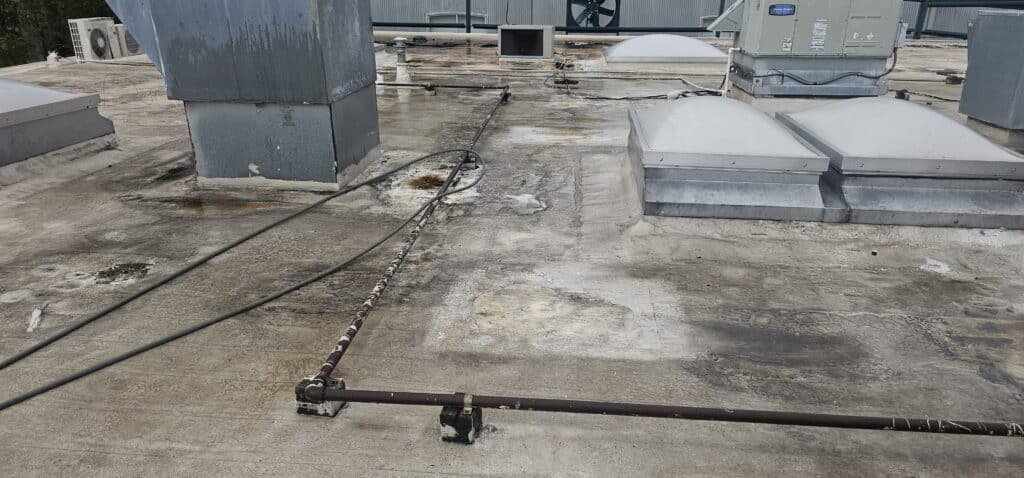
The roofer examining your Atlanta restaurant’s roof shakes his head in disbelief. “This membrane is completely destroyed,” he explains, pointing to large sections where the waterproof barrier has disintegrated. “See these grease stains? That’s what caused this. You’re looking at a $45,000 roof replacement, and your warranty won’t cover it.”
You had no idea that grease from your kitchen exhaust system was even reaching the roof, let alone causing catastrophic damage. Now you’re facing an enormous unexpected expense that could have been prevented with routine roof cleaning costing a few hundred dollars quarterly.
This scenario plays out regularly across commercial kitchens in Atlanta, Savannah, and Jacksonville. Restaurant roofs face unique challenges that most owners don’t understand until serious damage has already occurred.
How Grease Reaches Your Restaurant’s Roof
The path from your fryers and griddles to your roof membrane happens through your exhaust system—and it’s more direct than you might think.
The Exhaust System Journey:
Cooking generates grease-laden vapors that rise naturally toward your hood system. While hood filters capture 70-85% of this grease, 15-30% passes through into your ductwork. Professional hood cleaning removes most accumulated grease from ducts, but complete removal is impossible.
Your exhaust fan, typically mounted on the roof, pulls air through the entire system. As this grease-laden air exits the fan housing, it disperses onto the surrounding roof surface.
Weather Effects:
Rain doesn’t wash grease away—it spreads it. Water carries grease across larger roof areas, increasing the affected surface. During storms, grease mixes with rainwater and flows toward roof drains, potentially clogging them and creating standing water problems.
Jacksonville’s frequent afternoon thunderstorms compound this issue. The cycle of grease deposition followed by rain-driven spreading accelerates roof contamination in coastal markets.
Temperature Cycles:
Atlanta summers see roof surface temperatures exceeding 160°F. This heat liquefies grease, allowing it to penetrate deeper into roofing materials. When temperatures drop at night, grease solidifies within the membrane structure.
Savannah’s humidity adds another factor. Moisture trapped beneath grease layers creates ideal conditions for organic growth and accelerated material degradation.
Types of Roofing Materials and Their Vulnerabilities
Different roofing systems respond differently to grease exposure, but all suffer damage without proper cleaning.
TPO (Thermoplastic Polyolefin) Roofing
Common Commercial Application:
TPO represents one of the most popular commercial roofing materials. Its white reflective surface reduces cooling costs, and the heat-welded seams create watertight barriers—until grease attacks the material.
Grease Damage Mechanism:
Grease acts as a solvent on TPO membranes, breaking down the plasticizers that keep the material flexible. This causes the membrane to become brittle and crack. The white surface also discolors, losing its reflective properties and increasing cooling costs.
Roof-mounted exhaust fans surrounded by grease staining indicate active TPO deterioration. What appears as simple discoloration represents chemical changes weakening the membrane structure.
Typical Lifespan Impact:
TPO roofs normally last 15-20 years. Grease contamination can reduce this to 8-12 years or less. The savings from skipping roof cleaning evaporate when you need full roof replacement seven years early.
EPDM (Rubber) Roofing
Material Characteristics:
EPDM rubber roofing offers excellent durability and weather resistance under normal conditions. The material remains flexible across wide temperature ranges and resists UV damage well.
Grease Vulnerability:
Cooking grease degrades rubber compounds. The oils penetrate the EPDM material, causing swelling initially, then eventual hardening and cracking as volatile components evaporate.
Seams are particularly vulnerable. Grease compromises the adhesives and tapes used to join EPDM sections, leading to leaks at seam locations even when the main membrane appears intact.
Atlanta Climate Factors:
Atlanta’s temperature extremes—from below freezing in winter to 95°F+ in summer—accelerate grease damage to EPDM. The material expands and contracts naturally, and grease contamination makes it brittle, causing cracks to form during these cycles.
Modified Bitumen Roofing
Construction Details:
Modified bitumen roofs consist of asphalt-based materials reinforced with polymers for added strength. They’re common on older commercial buildings and can be applied with heat (torch-down) or cold adhesives.
Grease Interaction:
You might think asphalt-based roofing would resist grease damage since both are petroleum products. Actually, the opposite occurs—grease acts as a solvent, softening the bitumen and causing it to degrade faster.
The granular surface common on modified bitumen roofs traps grease particularly effectively. Once embedded, the grease is nearly impossible to remove and continues damaging the underlying material.
Savannah Historic Building Concerns:
Many of Savannah’s historic commercial buildings use modified bitumen roofing. These structures have limited options for roof replacement due to preservation requirements, making preventive grease cleaning particularly important.
Built-Up Roofing (BUR)
Traditional System:
Built-up roofs feature multiple layers of roofing felt with asphalt between layers, topped with gravel or a cap sheet. This “tar and gravel” system was standard for decades on commercial buildings.
Grease Accumulation:
The gravel surface on BUR roofs creates countless pockets where grease accumulates and concentrates. Rain doesn’t rinse these areas clean—it moves grease around but leaves substantial residue.
Grease attacks the asphalt layers, causing premature failure. Jacksonville’s coastal environment accelerates this process as salt air compounds the chemical attack on roofing materials.
Drainage Issues:
Grease-contaminated gravel on BUR roofs can cement together, creating impermeable areas that disrupt water drainage. This leads to ponding water that further damages the roof system.
Specific Damage Caused by Grease Accumulation
Understanding the damage mechanisms helps explain why prevention is so much cheaper than repair.
Membrane Deterioration
Chemical Breakdown:
Restaurant grease contains fatty acids, free radicals, and other compounds that chemically attack roofing membranes. This isn’t just surface dirt—it’s active chemical degradation of the material at a molecular level.
The process accelerates in sunlight. UV radiation combines with grease contamination to break down polymer chains in synthetic roofing materials, causing them to lose strength and flexibility.
Visible and Hidden Damage:
Surface discoloration is obvious—dark stains around exhaust fans spreading across white TPO roofs. Less obvious is the internal damage where grease has penetrated the membrane, weakening it throughout its thickness.
By the time visible damage appears, significant hidden deterioration has already occurred. This is why regular cleaning matters—it prevents damage before it becomes obvious and expensive.
Waterproofing Failure
Compromised Seals:
Roofing seams, flashing, and penetration seals all rely on adhesives, caulks, or tapes to maintain waterproof integrity. Grease attacks these materials as aggressively as it attacks the main membrane.
Water infiltration often begins at these vulnerable points. A small leak around an exhaust fan base caused by grease-degraded sealant can allow water into the building for months before interior damage becomes obvious.
Cascading Problems:
Once water penetrates the roof membrane, it damages insulation, structural decking, ceiling materials, and potentially electrical systems. A $500 roof cleaning that would have prevented the problem becomes a $15,000 repair addressing water damage throughout multiple building systems.
Atlanta restaurants operating in multi-story buildings face even worse scenarios. Water damage starting at the roof can cascade down through multiple floors, affecting tenants below and creating massive liability issues.
Accelerated Aging
Shortened Lifespan:
Roof warranties typically cover 15-20 years for materials. Grease contamination can reduce actual lifespan to 8-12 years. That’s losing 40-60% of your expected roof life.
The economic impact is significant. A $40,000 roof that should last 20 years provides good value. Replacing it after just 10 years because grease destroyed it means spending $40,000 twice as often as planned.
Compounded Degradation:
Each year of grease exposure accelerates future damage. The first year might cause minimal harm, but by year five without cleaning, degradation accelerates exponentially as damaged membrane becomes more vulnerable to further attack.
Warranty Voidance
Manufacturer Requirements:
Roofing manufacturers include maintenance requirements in warranty terms. Most specifically require keeping the roof clean and free of debris, oils, and grease. Failure to maintain the roof voids warranty coverage.
When your grease-damaged roof fails prematurely, the manufacturer inspects to determine cause. Obvious grease contamination gives them clear grounds to deny warranty claims. You’re left paying 100% of replacement costs rather than having the manufacturer contribute.
Documentation Matters:
Regular professional roof cleaning creates documentation proving proper maintenance. These service records support warranty claims for damage from other causes, showing you upheld your maintenance obligations.
Slip Hazards
Safety Concerns:
Grease on roofs creates dangerous walking surfaces. Maintenance workers, HVAC technicians, or anyone accessing the roof faces slip hazards that can cause serious injuries.
Jacksonville lawyers specializing in premises liability love these cases—injured workers on grease-slicked roofs often win substantial settlements. Your liability insurance covers these claims, but rates increase after incidents.
Access Requirements:
Commercial buildings need regular roof access for HVAC maintenance, exhaust fan service, and other routine work. Grease contamination makes this routine access hazardous, potentially causing workers to refuse to access your roof until it’s cleaned.
Environmental and Health Concerns
Beyond damage to your roof, grease accumulation creates broader problems.
Stormwater Contamination
Rainwater Runoff:
When rain falls on grease-contaminated roofs, it carries this FOG (fats, oils, and grease) into stormwater systems. This pollutes local waterways and violates environmental regulations in many jurisdictions.
Atlanta’s stormwater management program specifically addresses FOG pollution. Restaurants contributing to this problem through poor roof maintenance can face environmental violations and fines.
Watershed Protection:
Savannah’s proximity to sensitive coastal ecosystems makes stormwater quality particularly important. The Savannah River and surrounding marshlands support critical wildlife habitats that grease pollution threatens.
Jacksonville’s location on the St. Johns River similarly demands careful grease management. The city’s environmental department actively enforces pollution prevention requirements.
Odor Issues
Rancid Grease Smell:
Old grease decomposing on roofs generates powerful odors. These smells can affect adjacent businesses in multi-tenant buildings or reach ground level during certain wind conditions.
Savannah restaurants in the historic district with residential neighbors above or nearby face particular scrutiny. Odor complaints from residents can trigger health department investigations and citations.
Pest Attraction:
Roof grease attracts insects, birds, and even rodents. These pests cause additional roof damage, create sanitation concerns, and may eventually find ways into the building interior.
Seagulls are particularly problematic in Jacksonville’s coastal areas. These birds are attracted to roof grease and cause extensive additional damage through their droppings and nesting activities.
Impact on Building Systems
Roof grease affects more than just the roof membrane.
HVAC Equipment Damage
Condenser Contamination:
Roof-mounted HVAC condensers near exhaust fans accumulate grease on their coils and fins. This insulating layer reduces heat transfer efficiency, forcing units to work harder and consume more electricity.
Cleaning grease from HVAC coils requires specialized service beyond routine maintenance. This adds hundreds to HVAC service costs that proper roof cleaning would prevent.
Reduced Equipment Life:
HVAC equipment working harder due to grease-contaminated coils wears out faster. A condenser that should last 15 years might need replacement after 10 years because grease accumulation forced it to operate inefficiently.
Exhaust Fan Performance
Fan Housing Issues:
Exhaust fans operating in grease-saturated environments accumulate heavy deposits on fan blades, housings, and motors. This buildup affects balance, increases vibration, and accelerates bearing wear.
Atlanta restaurants often notice exhaust fans becoming progressively louder over time. This noise indicates bearing problems caused by imbalanced fan blades coated in solidified grease.
Motor Failure:
Grease entering fan motor housings causes premature failure. These repairs or replacements cost $2,000-$5,000 including labor, parts, and lost business during the work.
Drainage System Clogs
Roof Drain Blockages:
Grease mixed with debris clogs roof drains. When drains stop flowing, water ponds on the roof, accelerating all types of roof damage and potentially causing structural issues from water weight.
Savannah’s frequent summer storms can quickly overwhelm clogged drains. A single heavy thunderstorm might deposit 2-3 inches of water. If drains are blocked, this water has nowhere to go except through your roof.
Downspout Problems:
Grease clinging to downspout interiors gradually restricts flow. Eventually downspouts clog completely, causing water to back up onto the roof or overflow at inappropriate locations.
Cost Analysis: Prevention vs. Repair
The economics of roof cleaning strongly favor preventive maintenance.
Professional Cleaning Costs
Typical Service Pricing:
Professional restaurant roof cleaning typically costs $300-$800 per service depending on roof size, grease accumulation severity, and access difficulty. Most restaurants benefit from quarterly service.
Annual investment of $1,200-$3,200 for quarterly cleaning protects roof systems worth $40,000-$100,000 or more. The return on investment is obvious.
What’s Included:
Professional service removes accumulated grease using appropriate degreasers and pressure washing techniques. Technicians also clean around exhaust fans, inspect roof condition, and document service for compliance purposes.
Repair and Replacement Costs
Minor Repairs:
Localized roof damage from grease might be repairable for $2,000-$5,000. This assumes catching problems early before they spread or allow significant water infiltration.
Membrane Replacement:
Full roof membrane replacement costs $5-$12 per square foot. A typical restaurant roof of 5,000 square feet costs $25,000-$60,000 for complete replacement.
Jacksonville coastal restaurants face even higher costs due to additional wind uplift requirements and building code stipulations for structures near the Atlantic.
Water Damage Repairs:
Once roof leaks allow water inside, repair costs multiply. Water damage restoration, mold remediation, ceiling replacement, and potential electrical work can exceed roof replacement costs.
A Savannah historic district restaurant experienced a roof leak that damaged ornate plaster ceilings in dining areas. The restoration work cost $35,000—more than a complete new roof would have cost.
Lost Business During Repairs
Operational Disruption:
Major roof work often requires temporary closure or significant operational limitations. Each day closed costs restaurants $2,000-$10,000 in lost revenue, not counting the impact of disappointing customers who arrive to find you closed.
Reputation Impact:
Extended closures for emergency repairs damage your reputation. Customers who can’t dine at your establishment during repairs might discover competitors they prefer, costing you their business permanently.
Recommended Cleaning Schedules
Cleaning frequency depends on several factors specific to your operation.
High-Volume Frying Operations
Quarterly Service Minimum:
Fast food restaurants, wing specialists, and seafood establishments with constant fryer use produce maximum grease vapor. These operations need quarterly roof cleaning at minimum.
During peak seasons—summer for Jacksonville beach restaurants or football season for Atlanta sports bars—consider increasing to bi-monthly service.
Standard Full-Service Restaurants
Quarterly to Semi-Annual:
Traditional restaurants with mixed menus benefit from cleaning every 3-6 months. Choose quarterly service if your menu emphasizes fried or grilled items, semi-annual if cooking methods are gentler.
Savannah restaurants should lean toward quarterly service. The coastal humidity accelerates grease degradation and odor development, making more frequent cleaning worthwhile.
Limited Cooking Operations
Semi-Annual to Annual:
Cafes, bakeries, and establishments with minimal grease-producing cooking might extend to semi-annual or even annual roof cleaning. However, monitor roof condition between services to catch problems early.
Climate Considerations
Atlanta’s Temperature Extremes:
The combination of hot summers and cold winters in Atlanta accelerates grease damage through thermal cycling. This argues for more frequent cleaning than the same operation might need in milder climates.
Savannah’s Humidity:
Constant moisture in Savannah’s air promotes biological growth and accelerates organic material degradation. Add an extra cleaning cycle annually compared to drier climates.
Jacksonville’s Salt Air:
Coastal salt combined with grease creates particularly corrosive conditions. Jacksonville restaurants should adopt the most aggressive cleaning schedules appropriate for their cooking volumes.
What Professional Roof Cleaning Involves
Understanding the process helps you evaluate service providers and ensure complete work.
Initial Assessment
Roof Condition Inspection:
Technicians examine the roof before cleaning, identifying existing damage, membrane condition, and grease accumulation severity. This assessment helps prioritize work and alerts you to any concerns requiring attention.
Access and Safety:
Professional services establish safe roof access, set up fall protection as required, and cordon off areas below to protect people from falling water and debris during cleaning.
Grease Removal Process
Pre-Treatment:
Heavily greased areas receive pre-treatment with industrial degreasers formulated for roofing materials. These products break down grease without damaging membrane materials.
Pressure Washing:
Commercial pressure washers remove loosened grease, using appropriate pressure settings that clean effectively without damaging roofing materials. Too much pressure can harm membranes; too little leaves grease behind.
Exhaust Fan Attention:
The areas immediately around exhaust fans receive extra attention. Technicians clean fan housings, curbs, and flashing where grease concentrates most heavily.
Post-Cleaning Inspection
Drainage Verification:
After cleaning, technicians verify all roof drains flow freely. They flush drains with water to ensure grease hasn’t clogged them and that water flows away properly.
Damage Documentation:
Any roof damage discovered during cleaning is documented with photographs and descriptions. This allows you to address problems before they worsen and provides records for warranty or insurance purposes.
Recommendation Report:
Professional services provide written reports detailing work performed, conditions found, and recommendations for future service frequency or repairs needed.
DIY Roof Cleaning: Why It’s Not Recommended
Some restaurant owners consider handling roof cleaning internally to save money. This rarely works well and often creates new problems.
Safety Risks
Fall Hazards:
Commercial roof work requires proper fall protection equipment and training. Restaurant staff typically lack both. Serious injuries or fatalities from roof falls are tragically common.
OSHA regulations require fall protection for work above six feet. Violations carry substantial fines, and injuries bring workers’ compensation claims and potential lawsuits.
Chemical Exposure:
Effective degreasers for roof cleaning are caustic. Improper handling causes skin burns, eye damage, and respiratory problems. Professional technicians have training and equipment to use these products safely.
Inadequate Results
Wrong Products:
Consumer-grade cleaners don’t effectively remove restaurant grease from roofing materials. Staff might spend hours scrubbing with minimal results, or use inappropriate products that damage the roof.
Incomplete Coverage:
Without proper equipment, reaching all affected areas is difficult. Staff might clean visible areas near roof access while missing large grease-contaminated sections.
Damage Risk:
Excessive pressure washing damages roofing membranes. Too little pressure leaves grease behind. Finding the right balance requires experience most restaurant staff don’t have.
Hidden Costs
Labor Expenses:
Manager or cook time spent on roof cleaning costs money. A kitchen manager earning $20/hour who spends four hours cleaning the roof costs $80 in labor—not including the poor results.
Lost Productivity:
Staff cleaning roofs aren’t performing their primary duties. This impacts kitchen operations, service quality, or other maintenance tasks that get deferred.
Increased Liability:
DIY roof cleaning increases your liability exposure. If staff are injured, you face workers’ compensation claims and potential OSHA violations. If their cleaning damages the roof, you pay for repairs without recourse.
Integration with Other Maintenance Services
Roof cleaning should coordinate with your other restaurant maintenance.
Hood Cleaning Coordination
Complementary Services:
Many companies offering hood and duct cleaning also provide roof cleaning. Scheduling these services together creates efficiency and often reduces combined costs.
After professional hood cleaning removes grease from your exhaust system, roof cleaning eliminates grease that accumulated externally. This comprehensive approach maximizes fire safety and equipment protection.
Service Provider Selection:
Choose providers offering multiple services. Premier Grease in Atlanta, Savannah, and Jacksonville provides integrated grease management including hood cleaning, duct cleaning, and roof cleaning—simplifying your vendor relationships.
Preventive Maintenance Programs
Scheduled Service:
Include roof cleaning in your annual preventive maintenance calendar alongside hood cleaning, grease trap pumping, and HVAC service. Regular scheduling prevents neglect and spreads costs predictably across the year.
Budget Planning:
Knowing you need quarterly roof cleaning at $400 per service means budgeting $1,600 annually for this expense. Predictable costs are easier to plan for than emergency repairs.
Documentation Systems
Compliance Records:
Maintain files with all roof cleaning invoices, inspection reports, and photos. These records demonstrate proper maintenance to inspectors, insurance companies, and warranty administrators.
Digital Backup:
Scan paper records and maintain digital copies. Cloud storage ensures you never lose documentation to fires, floods, or simple misplacement.
Insurance and Warranty Protection
Proper roof maintenance protects valuable coverages.
Insurance Requirements
Policy Stipulations:
Commercial property insurance policies often include maintenance requirements. Failure to properly maintain your roof can give insurers grounds to deny damage claims.
If a storm damages your grease-contaminated roof, the insurance adjuster will investigate. Finding evidence of neglected maintenance—like years of grease accumulation—provides justification for claim denial.
Premium Implications:
Restaurants with histories of preventable damage claims face higher insurance premiums. Proper maintenance demonstrating risk management can support arguments for lower rates.
Warranty Preservation
Manufacturer Terms:
Roofing warranties explicitly require proper maintenance. Review your warranty documentation—you’ll find requirements to keep the roof clean and free of harmful substances including grease.
Contractor Obligations:
Some roofing contractors include extended labor warranties beyond manufacturer material warranties. These typically require even more rigorous maintenance documentation than manufacturer warranties.
Claim Support:
When legitimate warranty claims arise for defects or unexpected failures, comprehensive maintenance records strengthen your position. Manufacturers can’t argue you voided warranty through neglect when you have years of documented professional cleaning.
Regulatory Compliance Considerations
Environmental and building codes increasingly address grease management.
Stormwater Regulations
EPA Requirements:
Federal Clean Water Act provisions prohibit pollutant discharge into stormwater. FOG from restaurant roofs potentially violates these requirements.
Local enforcement varies, but Jacksonville, Atlanta, and Savannah all have stormwater quality programs that could cite restaurants for grease-contaminated runoff.
Building Codes
Maintenance Standards:
International Building Code provisions require maintaining buildings in code-compliant condition. Allowing grease to damage your roof potentially violates these general maintenance requirements.
Savannah’s historic preservation codes add another layer. Historic buildings must be maintained properly, and allowing preventable roof damage could trigger citations from preservation authorities.
Health Department Oversight
Sanitation Concerns:
While roof cleanliness isn’t typically part of routine health inspections, inspectors noting grease dripping from roofs or creating slip hazards might cite sanitation violations.
These citations connect to your overall health rating and can trigger enhanced inspection scrutiny.
Taking Action: Establishing Your Roof Cleaning Program
Protect your investment with systematic roof maintenance.
Initial Assessment
Professional Inspection:
Schedule a comprehensive roof inspection including grease contamination assessment. This establishes your baseline condition and helps determine appropriate initial cleaning intensity.
Severe existing contamination might require extra aggressive cleaning or multiple services to fully remediate.
Service Schedule
Establish Routine:
Based on your cooking volume, climate factors, and roof condition, establish a regular cleaning schedule. Quarterly service works for most operations; adjust as needed.
Automatic Scheduling:
Set up recurring appointments with your service provider. Automatic scheduling eliminates the need to remember bookings and prevents gaps in coverage.
Budget Allocation
Operating Expense:
Include roof cleaning in your regular operating budget as a predictable recurring expense. This is cheaper and easier to manage than addressing damage through capital expenditure budgets.
Staff Education
Why It Matters:
Ensure management understands the connection between kitchen operations and roof damage. This knowledge supports budget approvals and prioritization of maintenance services.
Monitoring:
Designate someone to periodically check roof condition between professional services, catching obvious problems early.
Your Roof Is Worth Protecting
Restaurant roofs face unique challenges from grease exposure that most commercial properties never encounter. The damage is real, progressive, and expensive—but completely preventable through regular professional cleaning.
Spending a few hundred dollars quarterly on roof cleaning protects five-figure investments in roofing systems while preventing six-figure disasters from leaks and water damage. The return on investment is obvious to any owner who understands the risks.
Don’t wait until you see damage. By then, expensive repairs are already necessary. Establish preventive roof cleaning now and protect your restaurant from this common but preventable problem.
Protect Your Restaurant’s Roof Today
Premier Grease provides professional restaurant roof cleaning throughout Atlanta, Savannah, and Jacksonville. Our experienced technicians safely remove grease accumulation, protect your roofing investment, and document service for compliance and warranty purposes. We coordinate roof cleaning with your hood and duct cleaning for comprehensive grease management. Contact us today to schedule an initial assessment and establish a roof cleaning program that protects your restaurant from costly damage.