
Why Restaurant Roofs Need Regular Grease Cleaning (And What Happens If You Don’t)
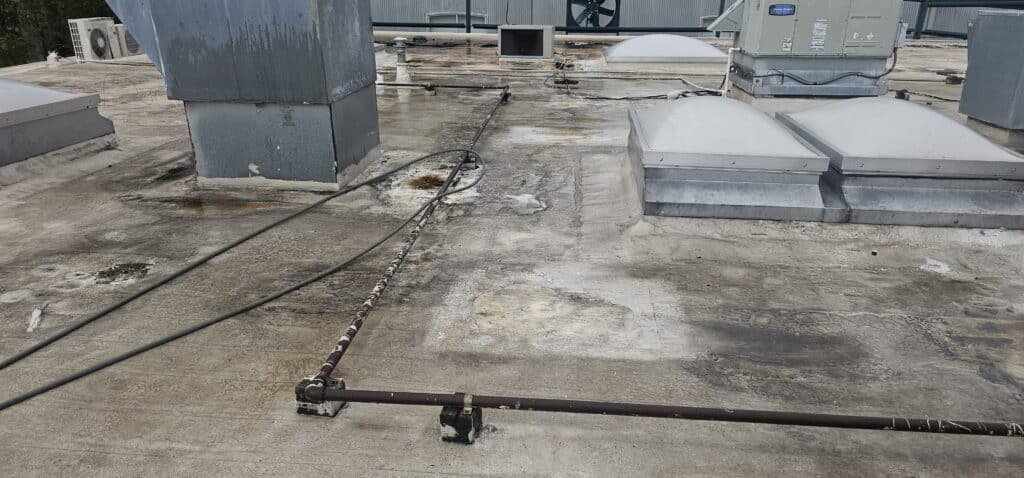
The roofer examining your Atlanta restaurant’s roof shakes his head in disbelief. “This membrane is completely destroyed,” he explains, pointing to large sections where the waterproof barrier has disintegrated. “See these grease stains? That’s what caused this. You’re looking at a $45,000 roof replacement, and your warranty won’t cover it.” You had no idea that grease from your kitchen exhaust system was even reaching the roof, let alone causing catastrophic damage. Now you’re facing an enormous unexpected expense that could have been prevented with routine roof cleaning costing a few hundred dollars quarterly. This scenario plays out regularly across commercial kitchens in Atlanta, Savannah, and Jacksonville. Restaurant roofs face unique challenges that most owners don’t understand until serious damage has already occurred. How Grease Reaches Your Restaurant’s Roof The path from your fryers and griddles to your roof membrane happens through your exhaust system—and it’s more direct than you might think. The Exhaust System Journey: Cooking generates grease-laden vapors that rise naturally toward your hood system. While hood filters capture 70-85% of this grease, 15-30% passes through into your ductwork. Professional hood cleaning removes most accumulated grease from ducts, but complete removal is impossible. Your exhaust fan, typically mounted on the roof, pulls air through the entire system. As this grease-laden air exits the fan housing, it disperses onto the surrounding roof surface. Weather Effects: Rain doesn’t wash grease away—it spreads it. Water carries grease across larger roof areas, increasing the affected surface. During storms, grease mixes with rainwater and flows toward roof drains, potentially clogging them and creating standing water problems. Jacksonville’s frequent afternoon thunderstorms compound this issue. The cycle of grease deposition followed by rain-driven spreading accelerates roof contamination in coastal markets. Temperature Cycles: Atlanta summers see roof surface temperatures exceeding 160°F. This heat liquefies grease, allowing it to penetrate deeper into roofing materials. When temperatures drop at night, grease solidifies within the membrane structure. Savannah’s humidity adds another factor. Moisture trapped beneath grease layers creates ideal conditions for organic growth and accelerated material degradation. Types of Roofing Materials and Their Vulnerabilities Different roofing systems respond differently to grease exposure, but all suffer damage without proper cleaning. TPO (Thermoplastic Polyolefin) Roofing Common Commercial Application: TPO represents one of the most popular commercial roofing materials. Its white reflective surface reduces cooling costs, and the heat-welded seams create watertight barriers—until grease attacks the material. Grease Damage Mechanism: Grease acts as a solvent on TPO membranes, breaking down the plasticizers that keep the material flexible. This causes the membrane to become brittle and crack. The white surface also discolors, losing its reflective properties and increasing cooling costs. Roof-mounted exhaust fans surrounded by grease staining indicate active TPO deterioration. What appears as simple discoloration represents chemical changes weakening the membrane structure. Typical Lifespan Impact: TPO roofs normally last 15-20 years. Grease contamination can reduce this to 8-12 years or less. The savings from skipping roof cleaning evaporate when you need full roof replacement seven years early. EPDM (Rubber) Roofing Material Characteristics: EPDM rubber roofing offers excellent durability and weather resistance under normal conditions. The material remains flexible across wide temperature ranges and resists UV damage well. Grease Vulnerability: Cooking grease degrades rubber compounds. The oils penetrate the EPDM material, causing swelling initially, then eventual hardening and cracking as volatile components evaporate. Seams are particularly vulnerable. Grease compromises the adhesives and tapes used to join EPDM sections, leading to leaks at seam locations even when the main membrane appears intact. Atlanta Climate Factors: Atlanta’s temperature extremes—from below freezing in winter to 95°F+ in summer—accelerate grease damage to EPDM. The material expands and contracts naturally, and grease contamination makes it brittle, causing cracks to form during these cycles. Modified Bitumen Roofing Construction Details: Modified bitumen roofs consist of asphalt-based materials reinforced with polymers for added strength. They’re common on older commercial buildings and can be applied with heat (torch-down) or cold adhesives. Grease Interaction: You might think asphalt-based roofing would resist grease damage since both are petroleum products. Actually, the opposite occurs—grease acts as a solvent, softening the bitumen and causing it to degrade faster. The granular surface common on modified bitumen roofs traps grease particularly effectively. Once embedded, the grease is nearly impossible to remove and continues damaging the underlying material. Savannah Historic Building Concerns: Many of Savannah’s historic commercial buildings use modified bitumen roofing. These structures have limited options for roof replacement due to preservation requirements, making preventive grease cleaning particularly important. Built-Up Roofing (BUR) Traditional System: Built-up roofs feature multiple layers of roofing felt with asphalt between layers, topped with gravel or a cap sheet. This “tar and gravel” system was standard for decades on commercial buildings. Grease Accumulation: The gravel surface on BUR roofs creates countless pockets where grease accumulates and concentrates. Rain doesn’t rinse these areas clean—it moves grease around but leaves substantial residue. Grease attacks the asphalt layers, causing premature failure. Jacksonville’s coastal environment accelerates this process as salt air compounds the chemical attack on roofing materials. Drainage Issues: Grease-contaminated gravel on BUR roofs can cement together, creating impermeable areas that disrupt water drainage. This leads to ponding water that further damages the roof system. Specific Damage Caused by Grease Accumulation Understanding the damage mechanisms helps explain why prevention is so much cheaper than repair. Membrane Deterioration Chemical Breakdown: Restaurant grease contains fatty acids, free radicals, and other compounds that chemically attack roofing membranes. This isn’t just surface dirt—it’s active chemical degradation of the material at a molecular level. The process accelerates in sunlight. UV radiation combines with grease contamination to break down polymer chains in synthetic roofing materials, causing them to lose strength and flexibility. Visible and Hidden Damage: Surface discoloration is obvious—dark stains around exhaust fans spreading across white TPO roofs. Less obvious is the internal damage where grease has penetrated the membrane, weakening it throughout its thickness. By the time visible damage appears, significant hidden deterioration has already occurred. This is why regular cleaning matters—it prevents damage before it becomes obvious and expensive. Waterproofing